 MANSOQ
 RCM & insurance
Choose correction, information response or appeal
Recover a rejected or disputed claim using the transaction that matches the problem.
Current source · source reviewed · 7 min read
Before you begin
- Original claim/exchange and a classified response.
- Corrected facts or clinical evidence reviewed by the responsible team.
1. Classify before retrying
Read whether the failure is transport, validation, payer business error, missing information or contested adjudication. The identity and payload rules differ.
2. Correct a defective claim through its chain
Use the supported correction mechanism, preserving the original claim and linked cancellation/fresh-claim relationship where required. Do not edit a submitted claim’s historical facts in place.
3. Respond to a request for information
Supply the requested evidence against the original request/claim reference. An information response is not a replacement claim or a clinical appeal.
4. Appeal an adjudicated decision
Provide the original claim business identifier and complete clinical justification or attachment. Use the supported claim-level appeal route.
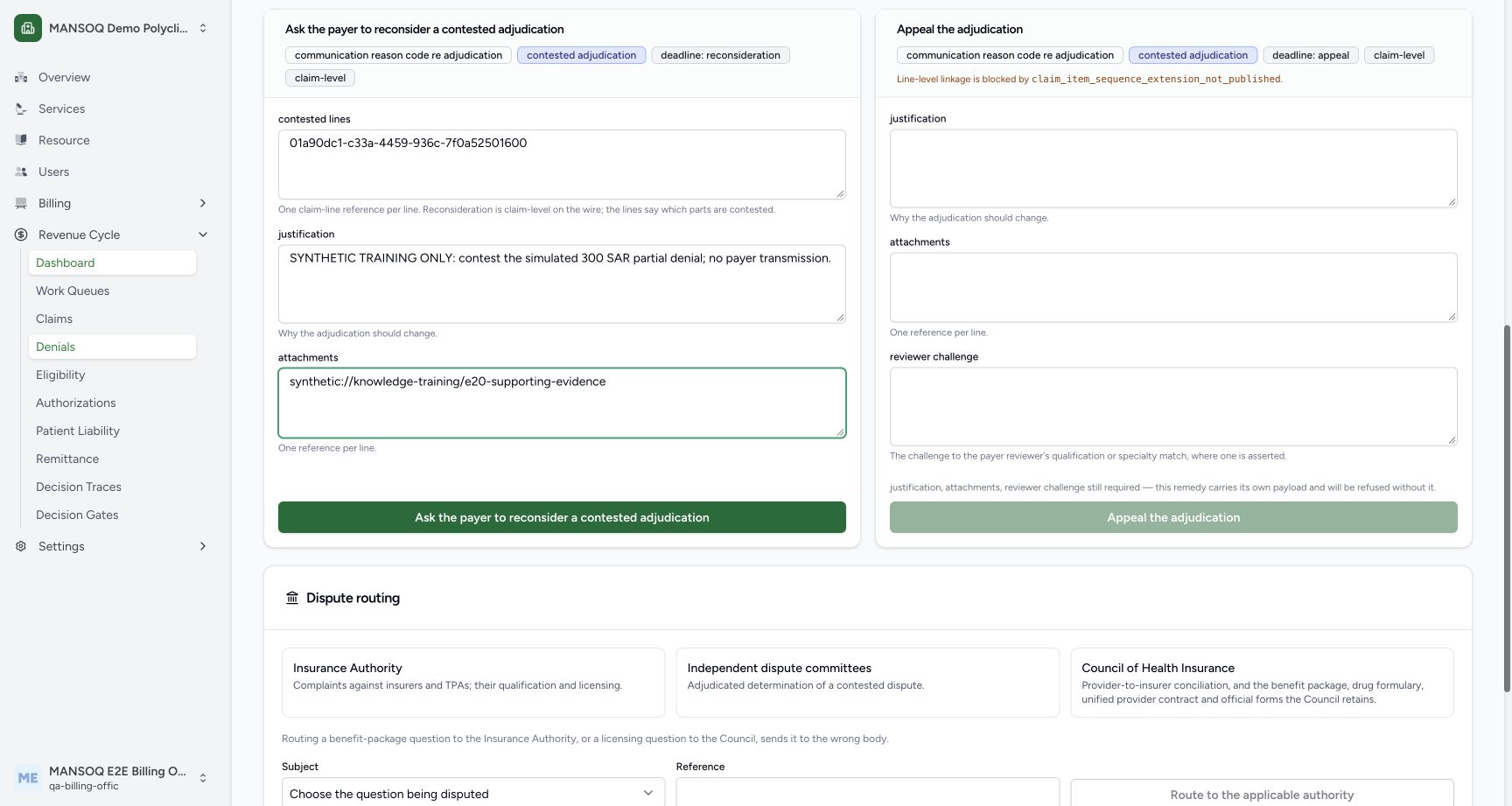
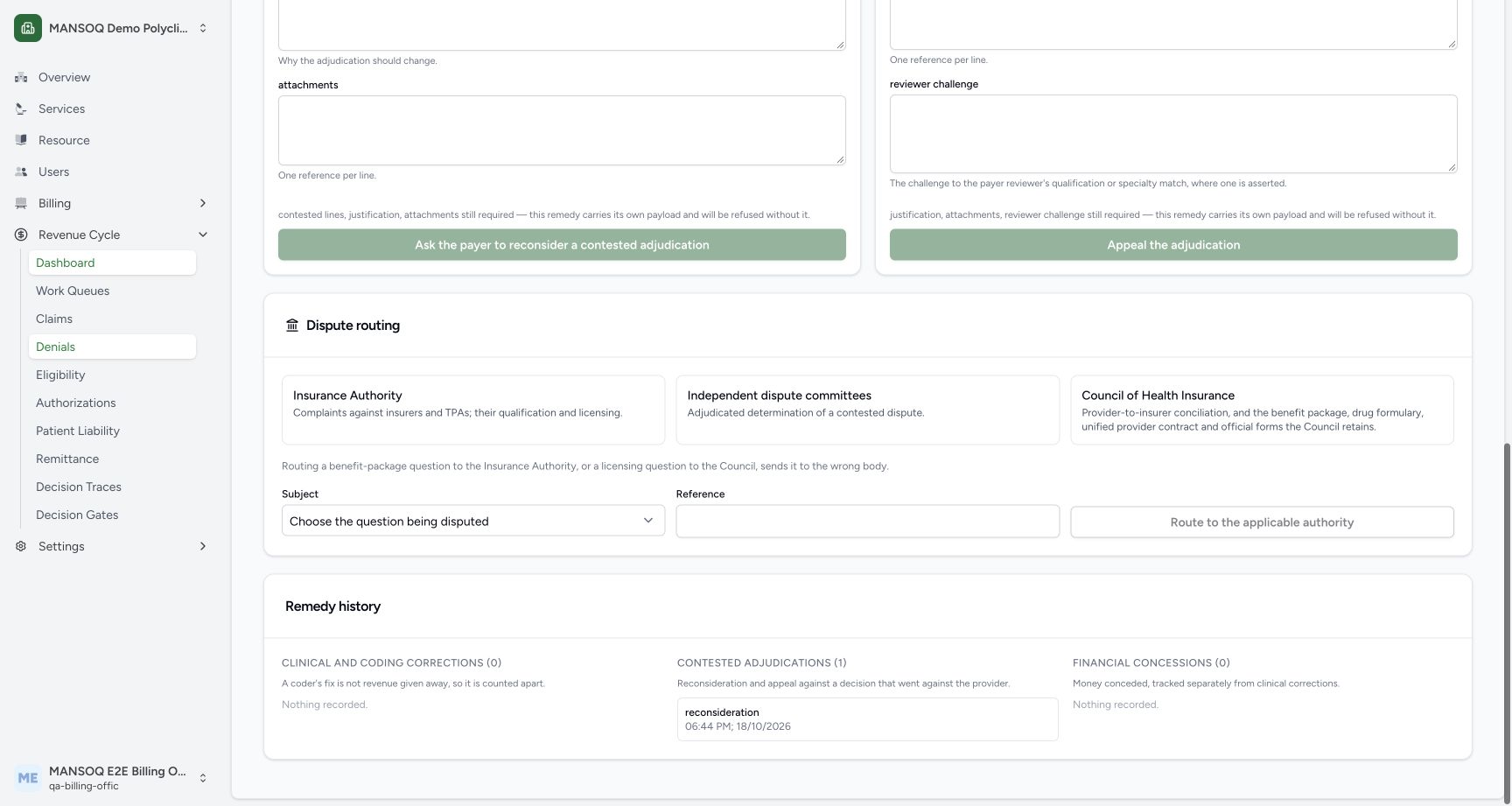
The captured action is a locally recorded reconsideration of contested adjudication, not an appeal transmission or a clinical coding correction. Each remedy keeps its own required payload and track.
5. Keep added services in the episode
A new claim for added services retains the same episode identifier and does not overwrite the prior claim. Review sibling claims to avoid duplicate charging.
No generic resubmission action
The current denial endpoint accepts four explicit remedies and refuses an unspecified “resubmission” transaction. Each remedy records its own track, mechanism, deadline type, actor and evidence.
Retry scope
A transport retry preserves persisted NPHIES identity. A corrected business request can require a new identity. The NPHIES rule must not be copied to rejected ZATCA documents.
What the current screenshots demonstrate
These are current captures from an isolated Polyclinic training environment, using explicitly fictional insurance, response, authorization, remittance and policy fixtures. They demonstrate the displayed controls and scoped observations only. They do not establish live payer connectivity, a genuine insurer approval, regulatory qualification, production tax filing, a complete role/facility matrix or a cleared financial estimate.
Troubleshooting
The same rejection repeats
Verify that the chosen remedy actually changes the defective fact or supplies the requested evidence. Review request identity semantics with the integration owner before sending again.
Source evidence
References are pinned to the private MANSOQ source repository. Repository access is required to open these links.
- repositories/platform/mansoq-core/docs/rcm/OPERATOR-GUIDE.md:655 · f6e9f05f
- repositories/platform/mansoq-core/mansoq/emr/api/viewsets/rcm/claims.py:253 · f6e9f05f
- repositories/platform/mansoq-core/mansoq/emr/rcm/services/charge_capture.py:1530 · f6e9f05f
- repositories/platform/mansoq-core/mansoq/emr/rcm/nphies/exchange.py:145 · f6e9f05f