 MANSOQ
 RCM & insurance
Work a denial with the right owner and deadline
Separate correction, evidence, reconsideration and appeal while preserving patient-liability controls.
Current source · source reviewed · 8 min read
Before you begin
- An adjudicated rejection or established denial case.
- Denial reason, received timestamp and supporting response.
1. Open the Denial workbench
Identify the claim, reason category, responsible team, required evidence, recovered amount and current disposition. Check whether the item is truly a denial rather than a platform or business error.
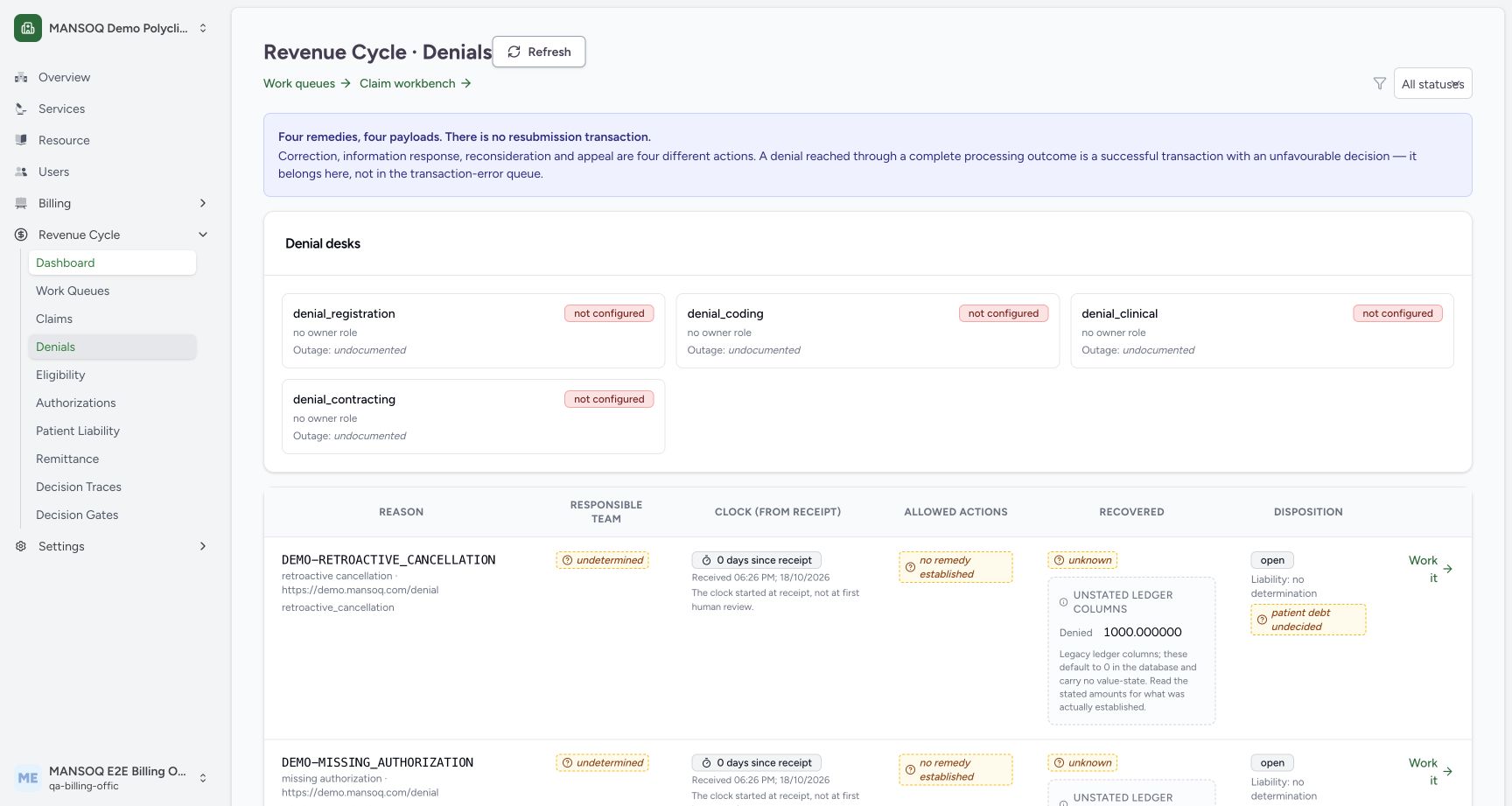
2. Read deadlines from receipt
Review deadline calculation using the received timestamp, applicable instrument and calendar/working-day basis. A response waiting unread has already started aging.
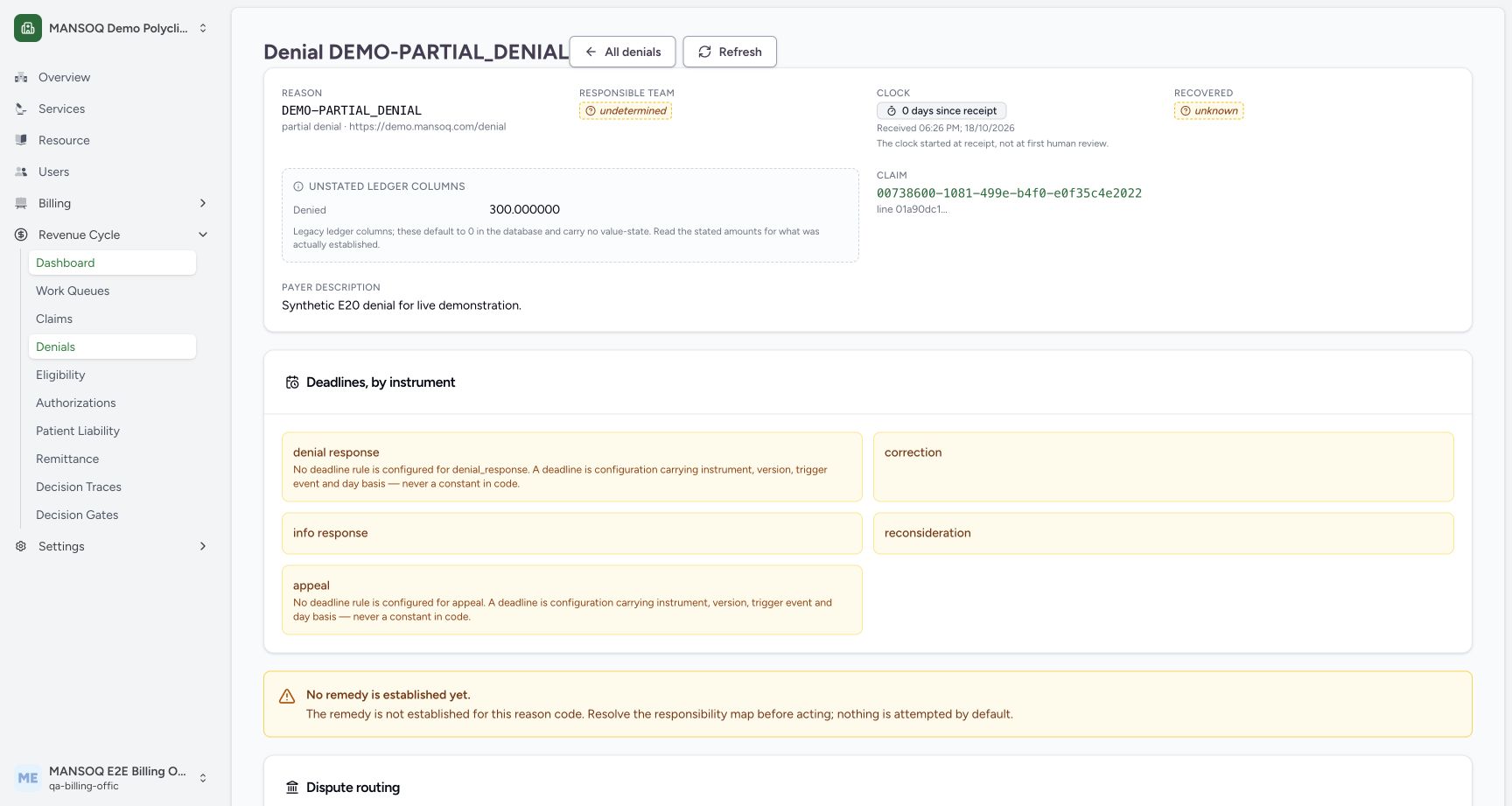
3. Choose the supported remedy
Select correction, information_response, reconsideration or appeal according to the recorded map and evidence. Each action requires its own payload; an empty justification is refused.
For the tested reconsideration, the Billing Officer supplied a synthetic claim-line reference, a justification and a supporting-reference placeholder. The placeholder is not proof of an uploaded document. The endpoint records the local claim-level remedy; no payer transmission was tested.
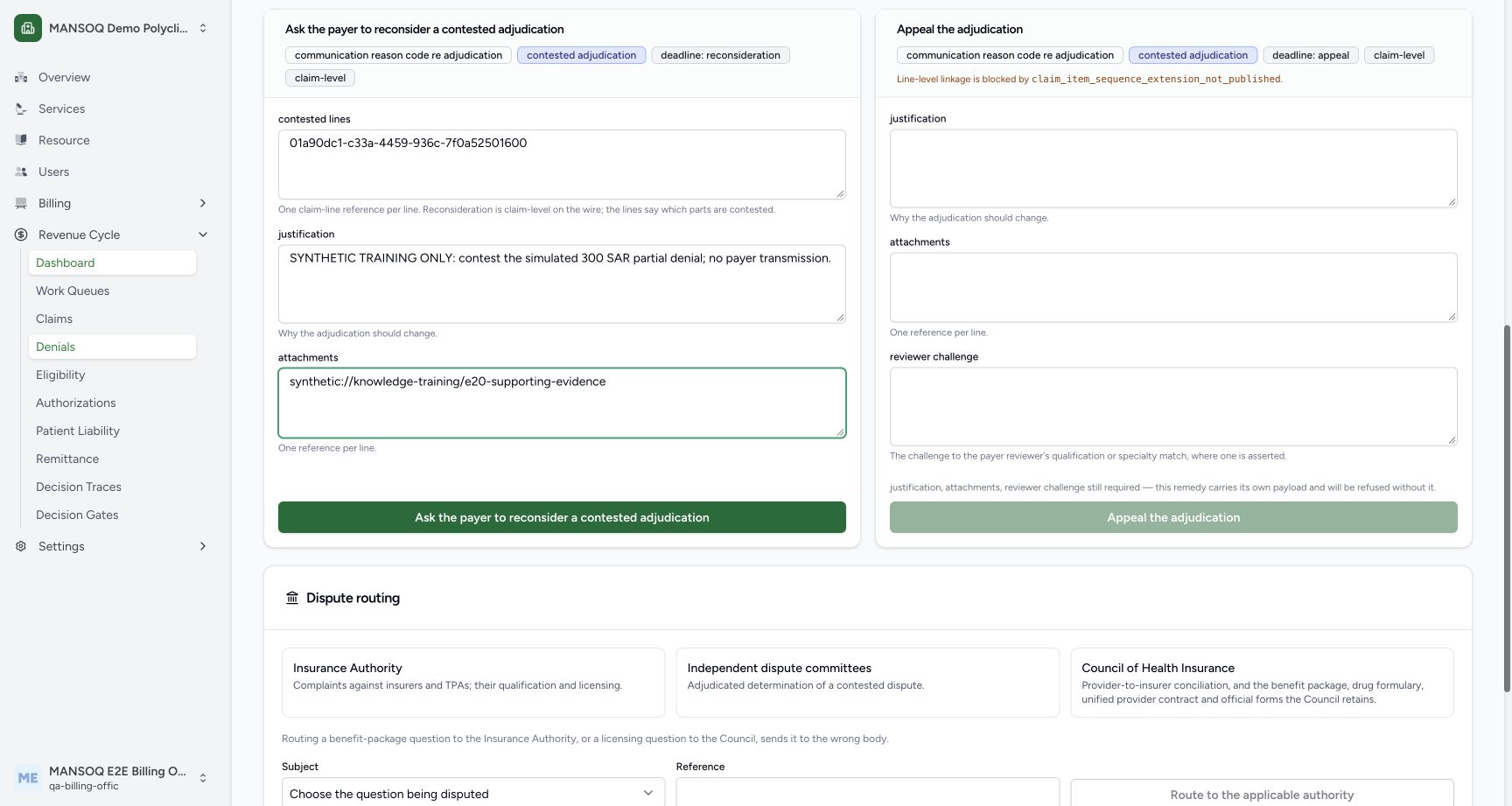
4. Record and follow the action
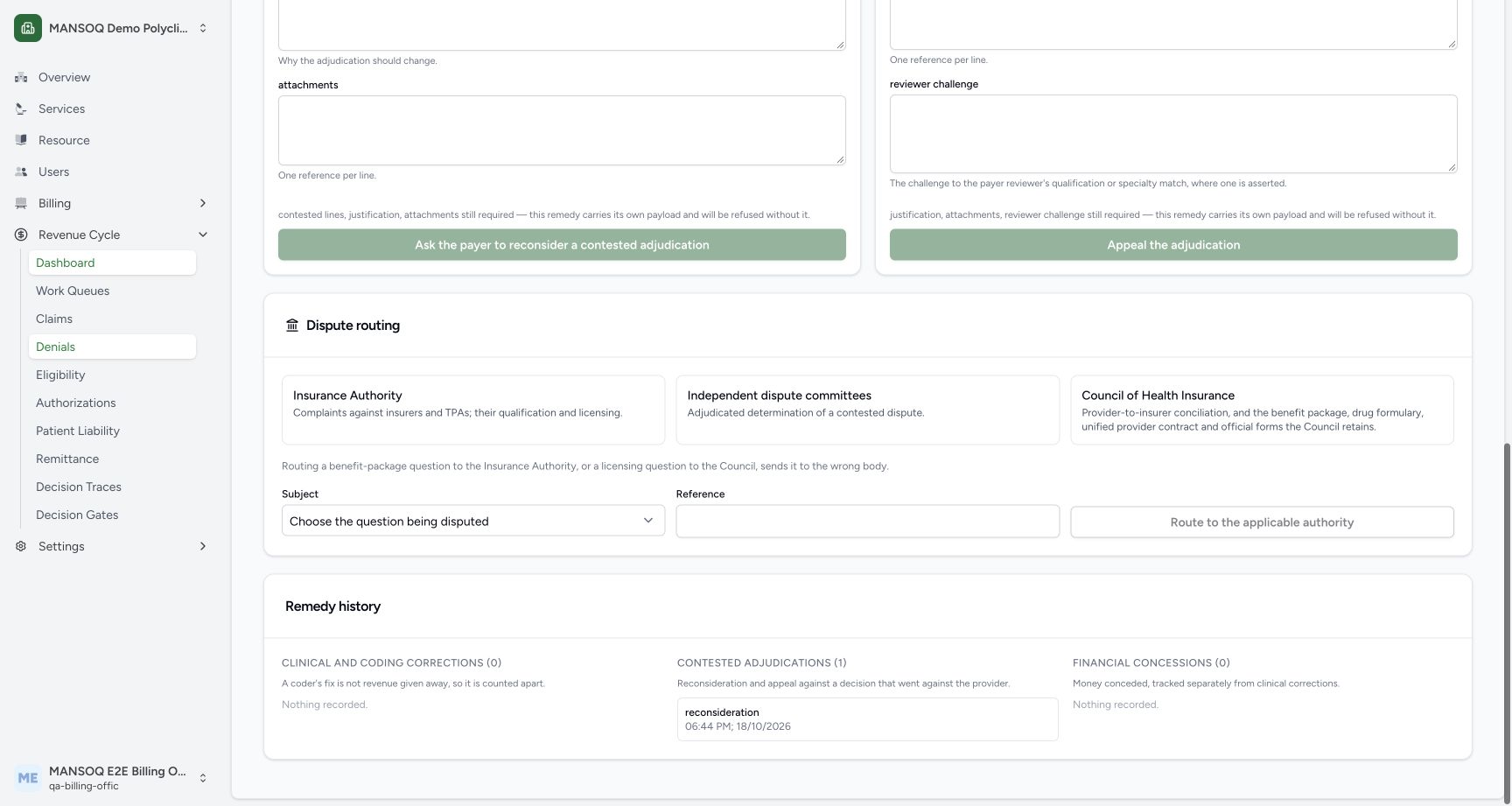
Retain original claim references and action history. Use a request key or supported idempotency header in integrations to avoid duplicate remedy recording.
The saved example shows Contested adjudications (1). Independent database readback confirms one recorded reconsideration and its fields. Clinical/coding corrections and financial concessions remain separate history tracks.
5. Review final responsibility separately
A denial reason explains why a payer rejected something; it does not establish who owes the residual. Do not transfer contractual or undetermined amounts to a patient.
Special handling
Clinical medical-necessity disputes require clinical evidence. Fraud handling has a separate path. Contractual adjustments are not recoverable denial work merely because a balance exists.
Scope limitation
The current remedy endpoint refuses line-level appeals where the required profile extension is unavailable. Use the supported claim-level route and original business identifier.
What the current screenshots demonstrate
These are current captures from an isolated Polyclinic training environment, using explicitly fictional insurance, response, authorization, remittance and policy fixtures. They demonstrate the displayed controls and scoped observations only. They do not establish live payer connectivity, a genuine insurer approval, regulatory qualification, production tax filing, a complete role/facility matrix or a cleared financial estimate.
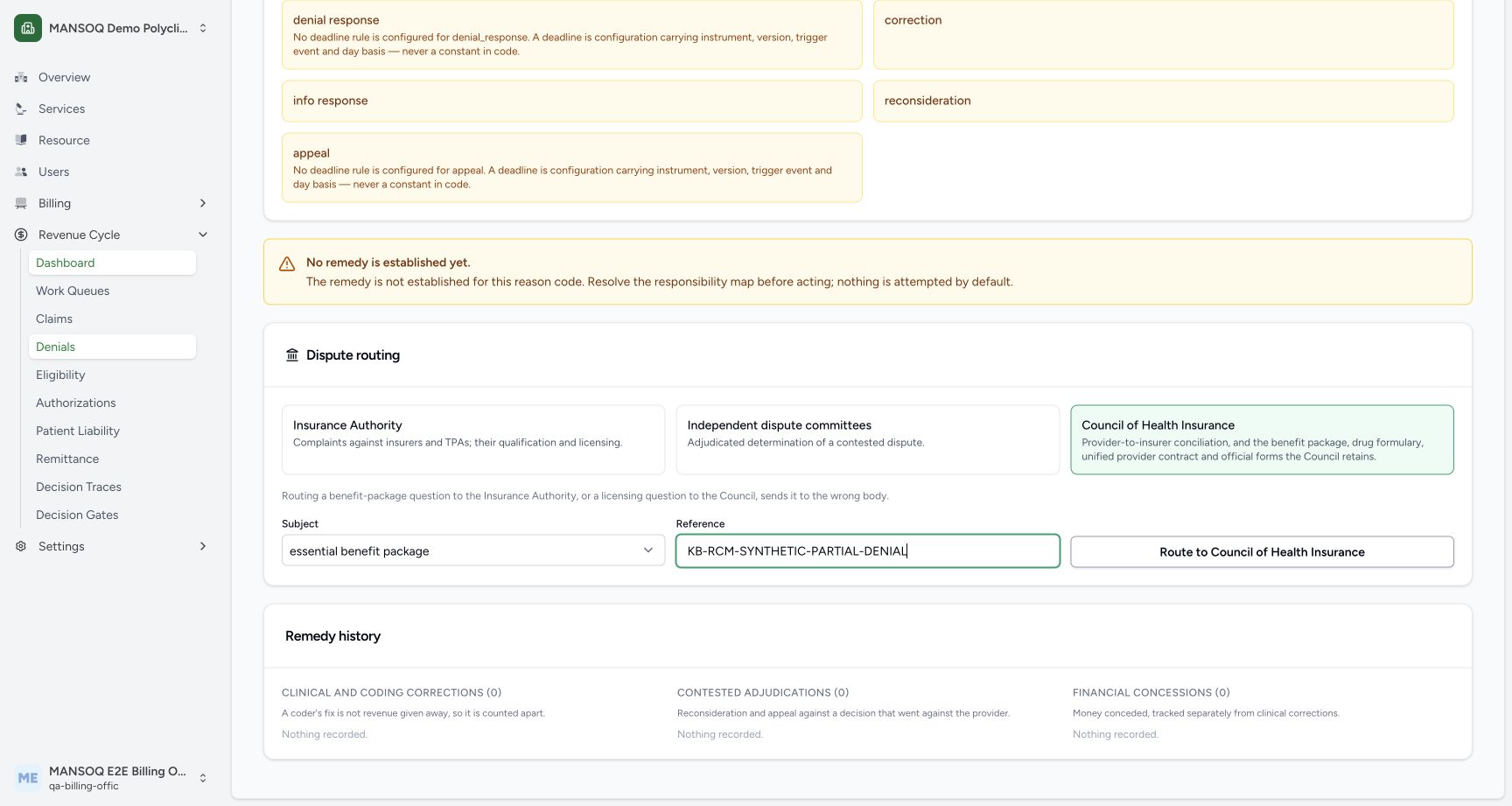
Dispute routing is a separate local action
The current form selects a route from the dispute subject and records local routing history. The essential-benefit-package teaching example selects the Council route. This observed action did not send a complaint, email or API transaction to an external authority. Validate the applicable real instrument and organization process before external escalation.
Troubleshooting
The desired remedy is rejected
Read the endpoint’s permitted remedies, missing payload fields and line-level scope limitation. Supply the correct evidence instead of substituting a generic resubmission.
Source evidence
References are pinned to the private MANSOQ source repository. Repository access is required to open these links.