 MANSOQ
 RCM & insurance
Create insurance parties, roles, identifiers and administration drafts
Separate legal identity, licence facts, environment-qualified identifiers, delegated functions and settlement responsibility.
Current source · Source reviewed; exact stated local synthetic UI/API continuation and independent readback observed · 10 min read
Before you begin
- Use a separate synthetic training estate and authorized maker/reviewer accounts for demonstrations. For production, use the actual approved organizational and contract sources.
1. Create one bilingual organization
Search existing entities first. Add the organization’s internal code, actual Arabic/English legal names, registered name, country and local classifications. An Insurer label or brand does not establish an insurer role or licence.
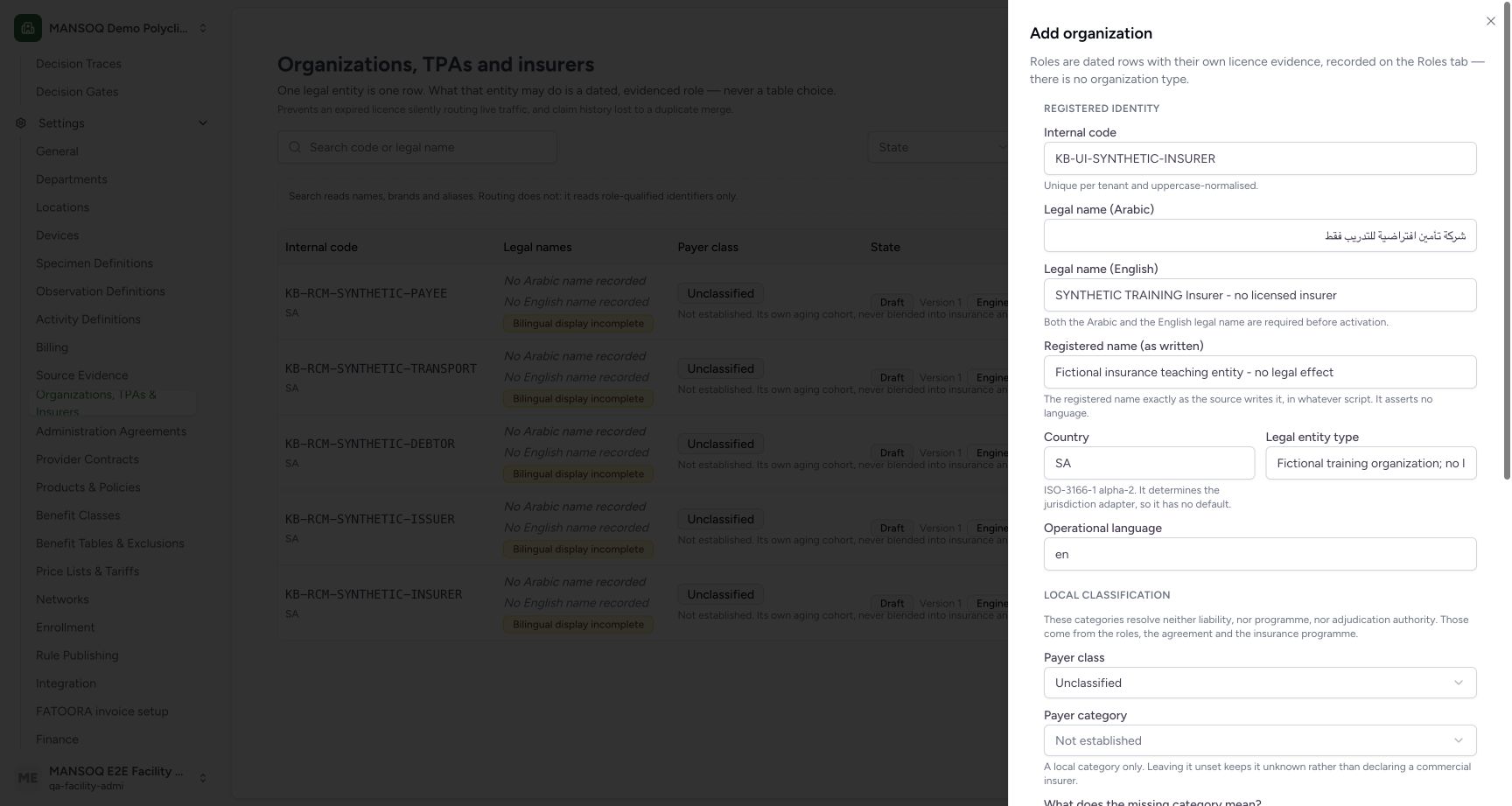 1234
1234- Internal code: Unique organization reference, separate from routing identifiers.
- Bilingual legal names: Record each language from its actual source.
- Registered name: Retain the source name as written.
- Local payer class: Unclassified remains unresolved.
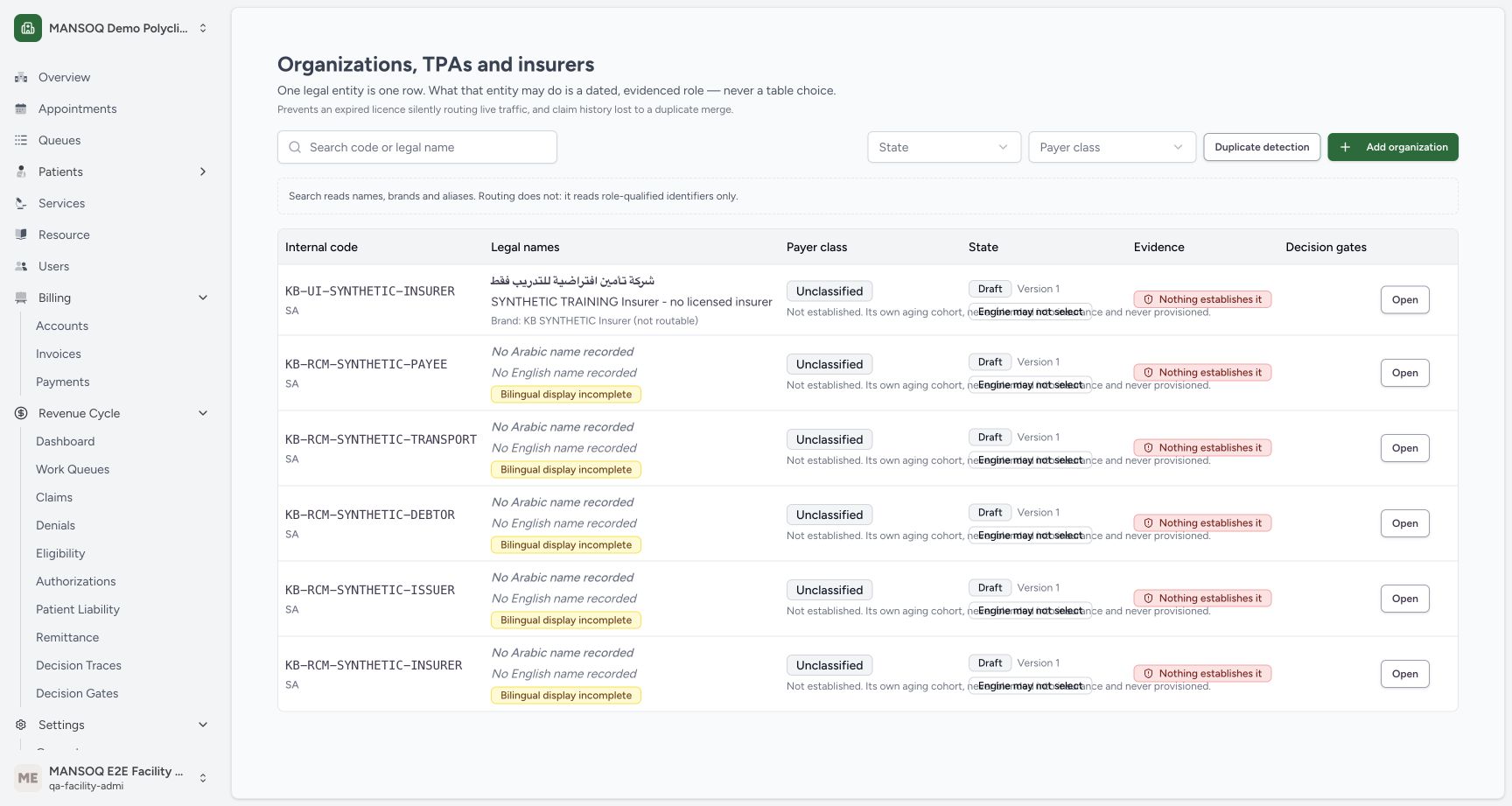 123
123- Saved internal code: Open this exact entity.
- Draft retained: Creation did not activate the organization.
- Evidence absent: Nothing establishes the row for production.
2. Add each evidenced role separately
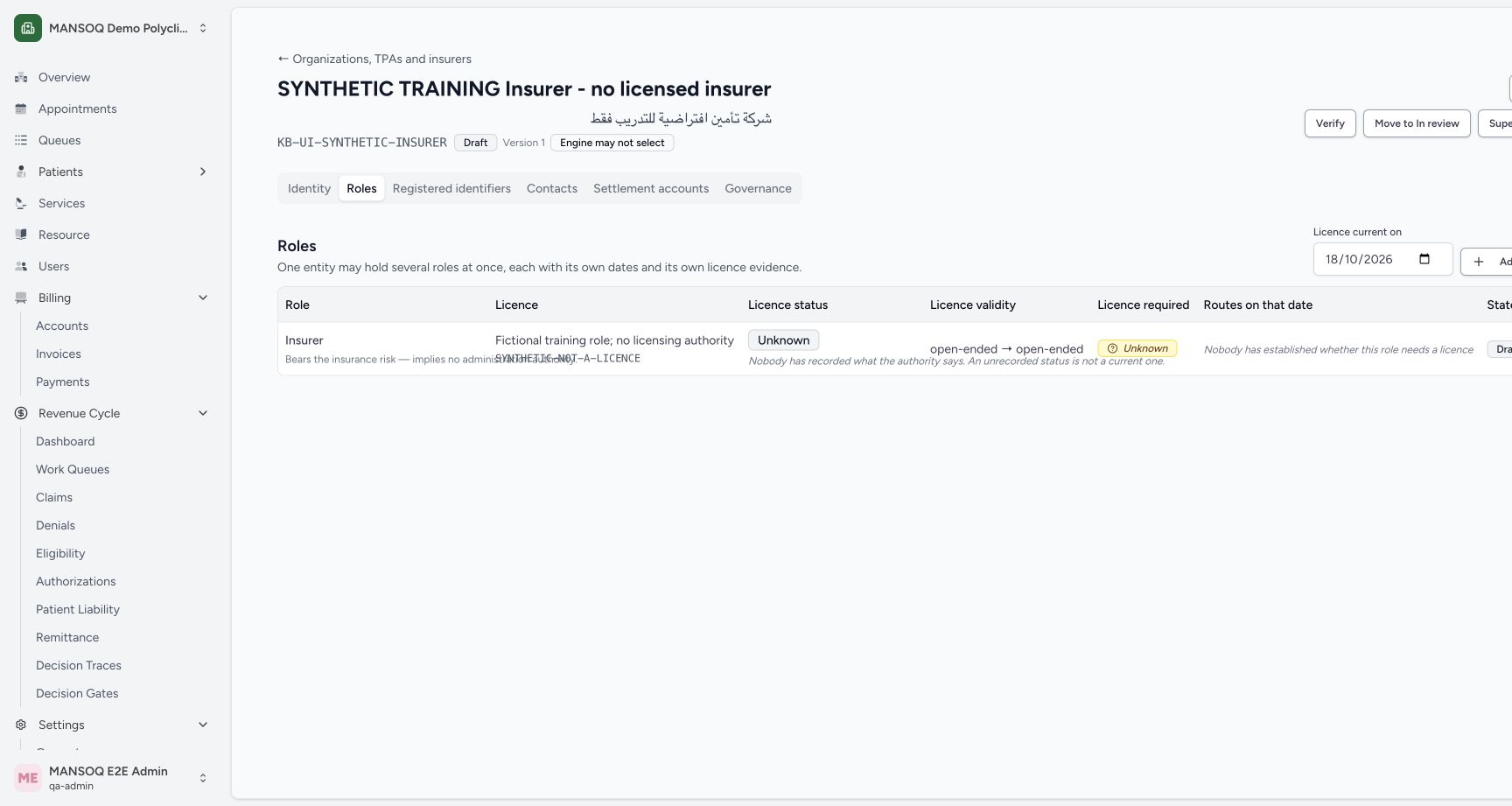
Open Roles and record role, licence requirement, issuing authority, number, status and validity. The current form omits required configuration effective_from, and its attempted save produced a nested-refusal page error. In the teaching case a normal authenticated API continuation supplied the explicit 2026 period; the resulting role remains Draft with unknown licence status.
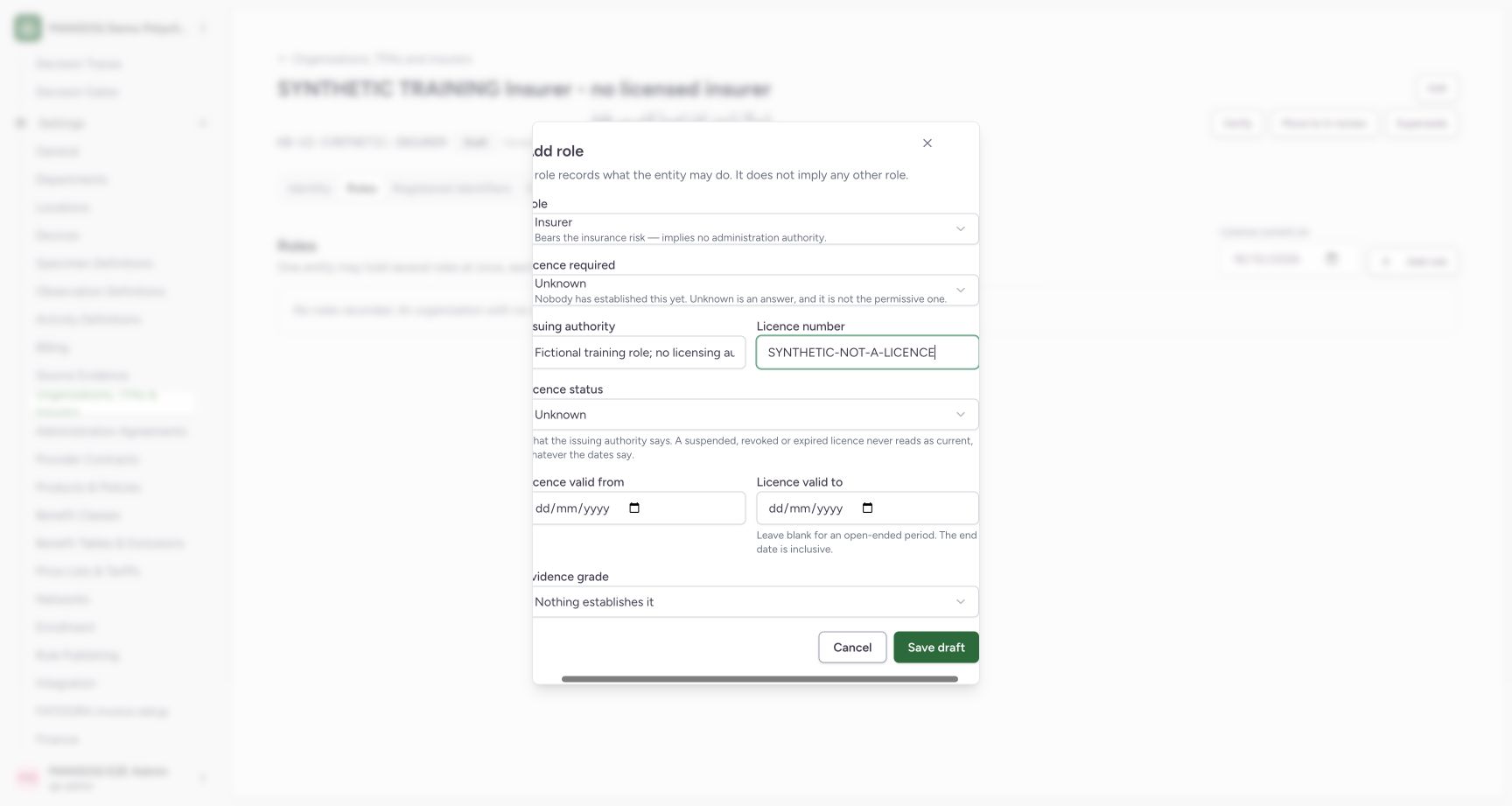 1234
1234- Insurer role: Risk bearing does not imply administration authority.
- Licence requirement unknown: Unknown does not mean no licence is required.
- Fictional number: SYNTHETIC-NOT-A-LICENCE is not legal evidence.
- Attempted draft save: The current UI attempt was refused; do not treat this as success.
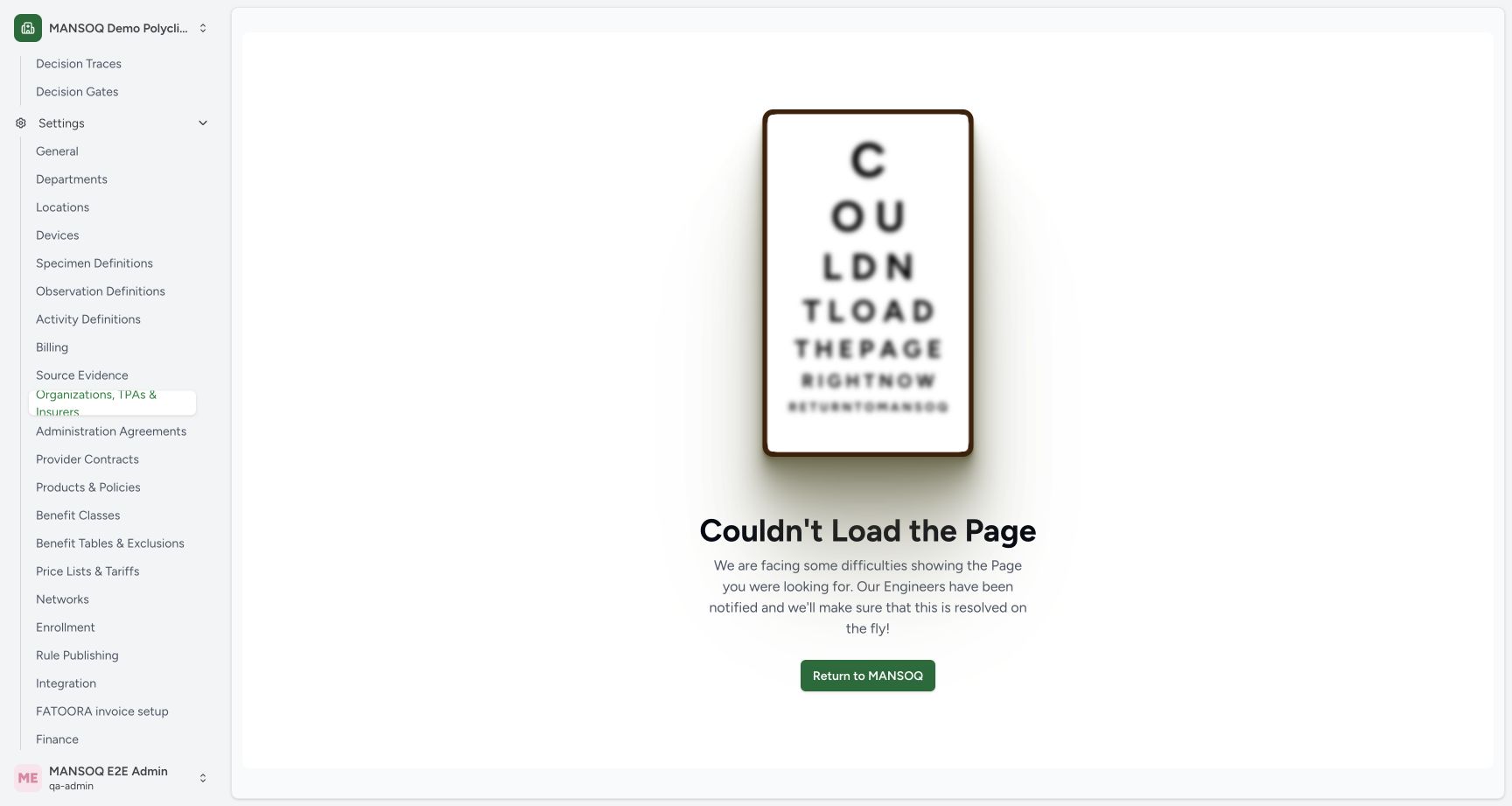 12
12- Error fallback: Reopen the entity and inspect whether any row persisted before retrying.
- Return control: Do not repeatedly create duplicate roles.
 123
123- Saved insurer role: One entity may have separately evidenced roles.
- Licence status unknown: A recorded fictional number is not a current licence.
- Licence versus row dates: Licence validity and configuration effective period are separate fields.
3. Record the canonical system, opaque value and environment
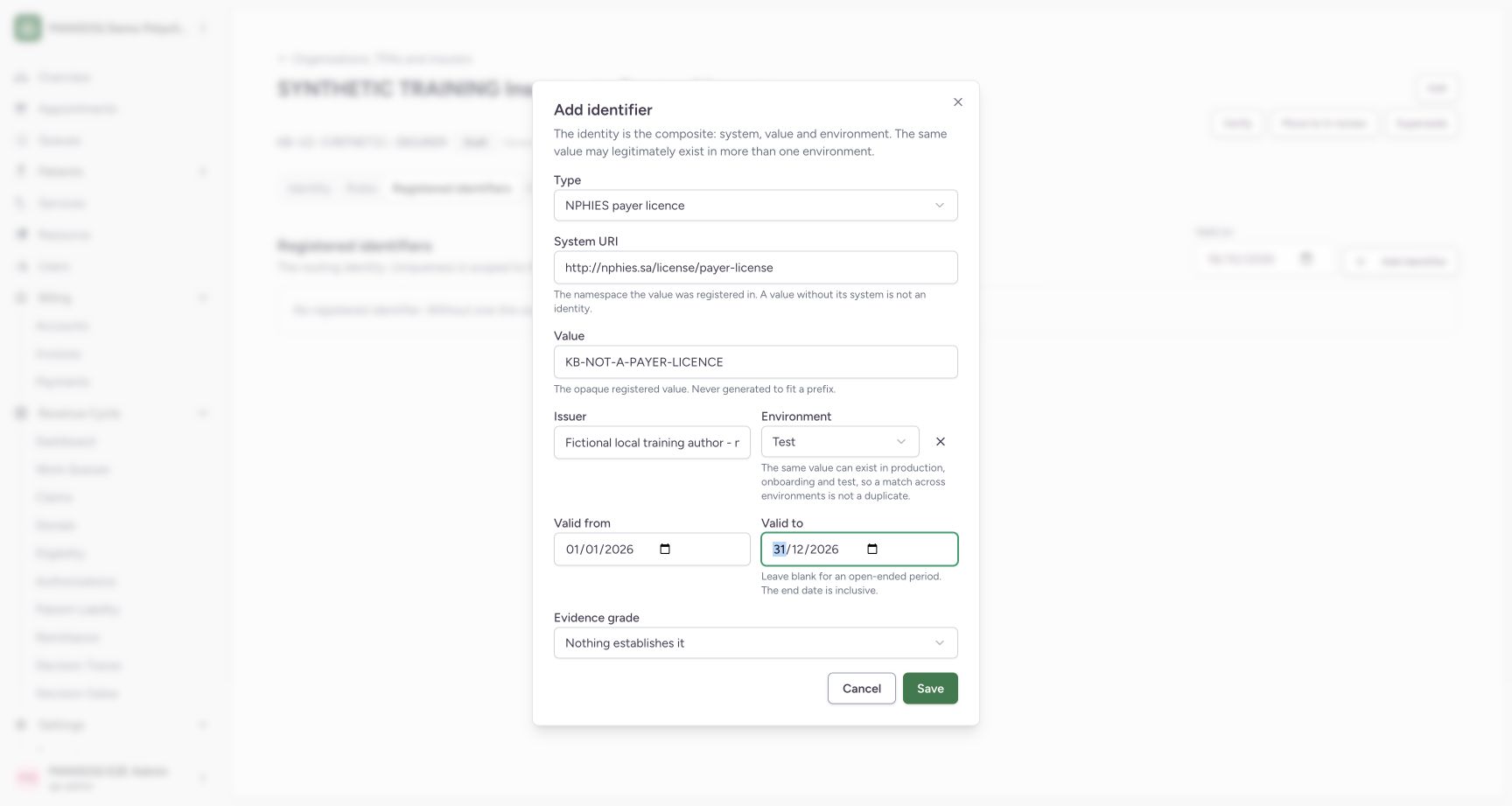
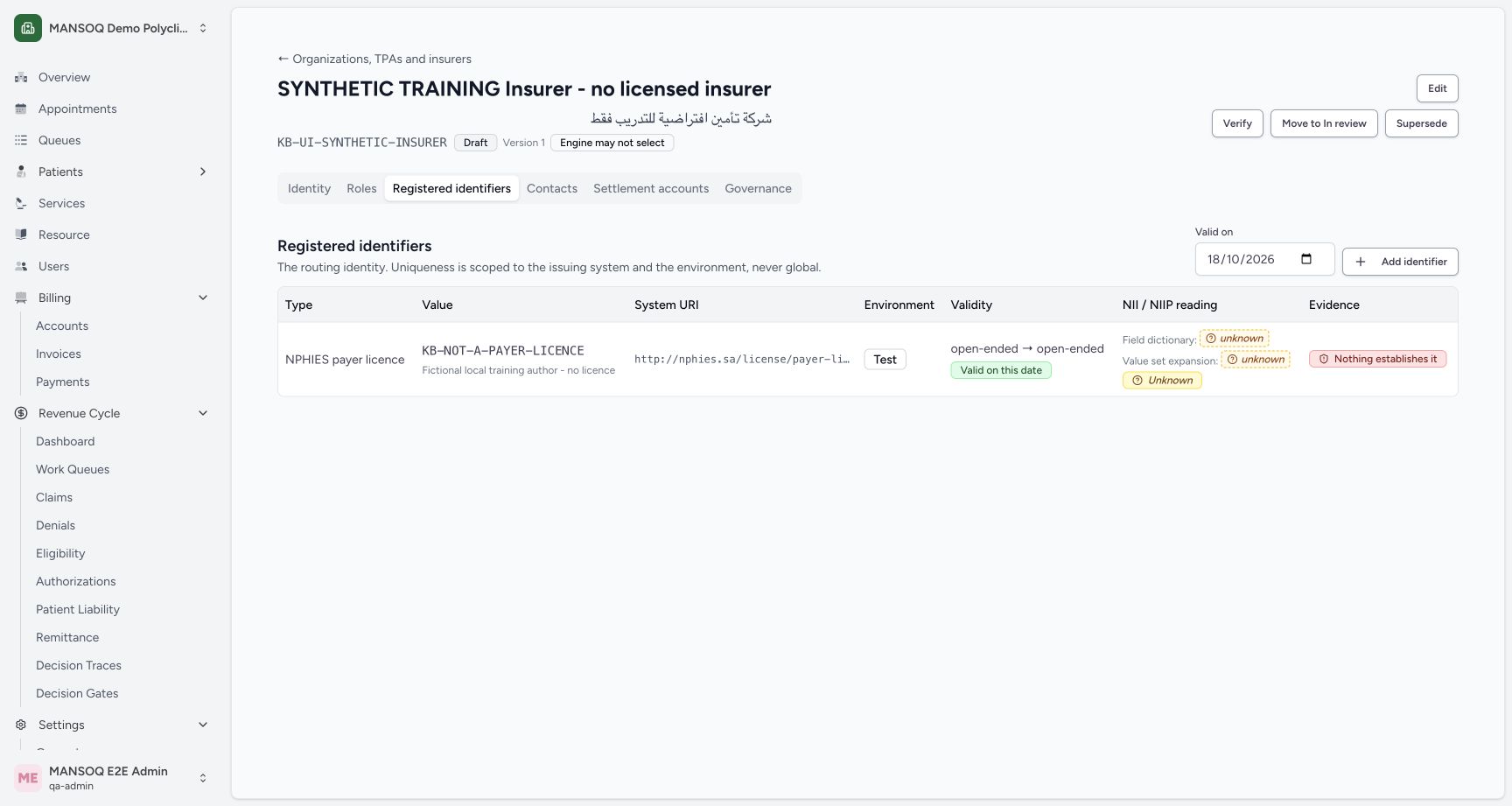
Open Registered identifiers. Use the audited identifier namespace, preserve the registered opaque value and select the actual environment. The fictional Test value is not a genuine payer licence. Prepared date fields in the intermediate frame were not saved; the final independently read-back teaching identifier is open-ended.
 123
123- Canonical namespace: System URI is part of identity, not arbitrary branding.
- Opaque test value: Never manufacture a genuine licence to match an expected prefix.
- Test environment: Environment is part of identifier uniqueness.
 1234
1234- Stored test value: Match system, value and environment together.
- Actual saved dates: This record is open-ended; the earlier date draft is not its saved period.
- Vocabulary remains unknown: No field-dictionary/value-set qualification was invented.
- Evidence still absent: Test identifier does not establish routing authority.
4. Keep the administrator as a separate entity
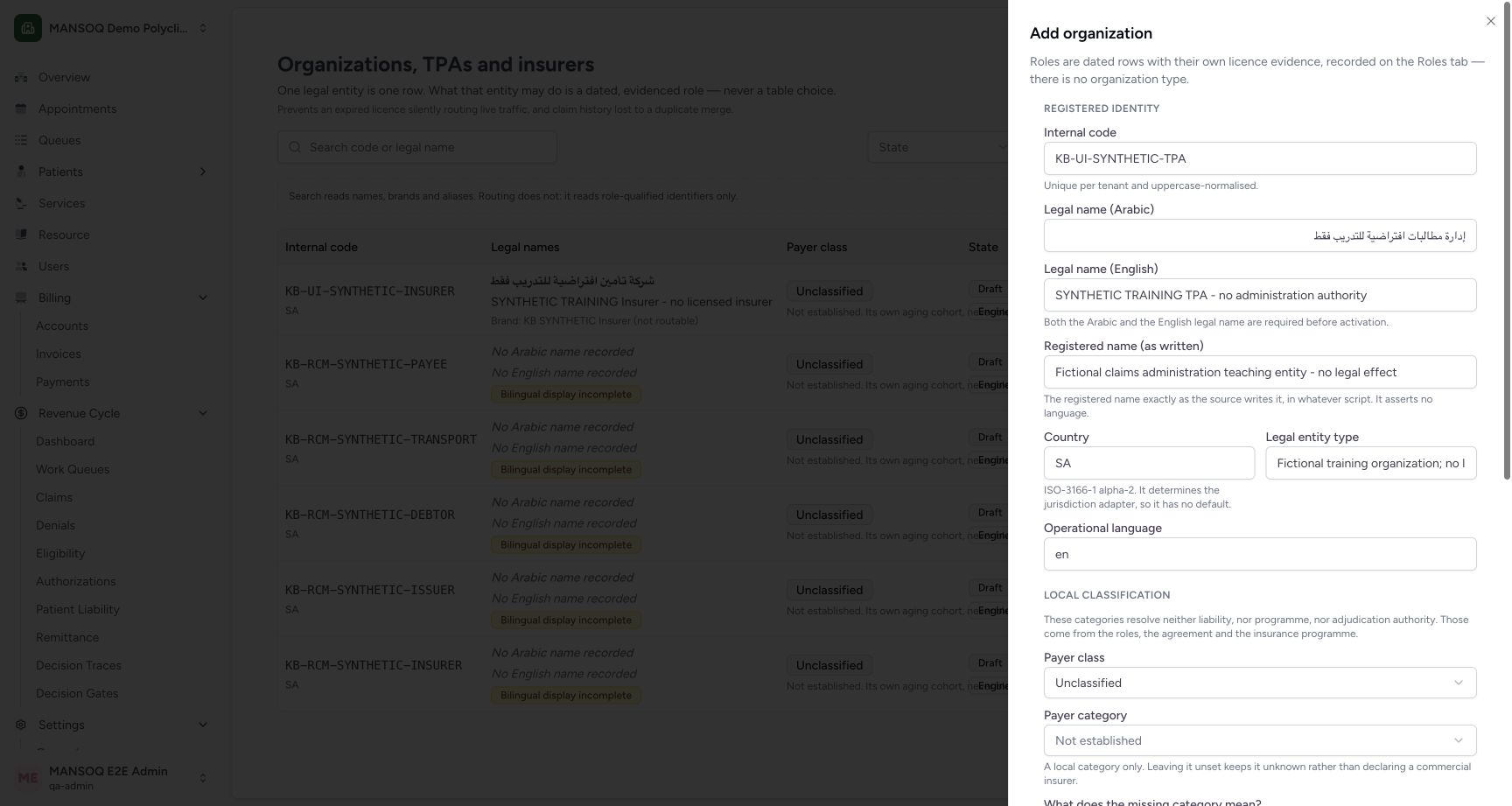
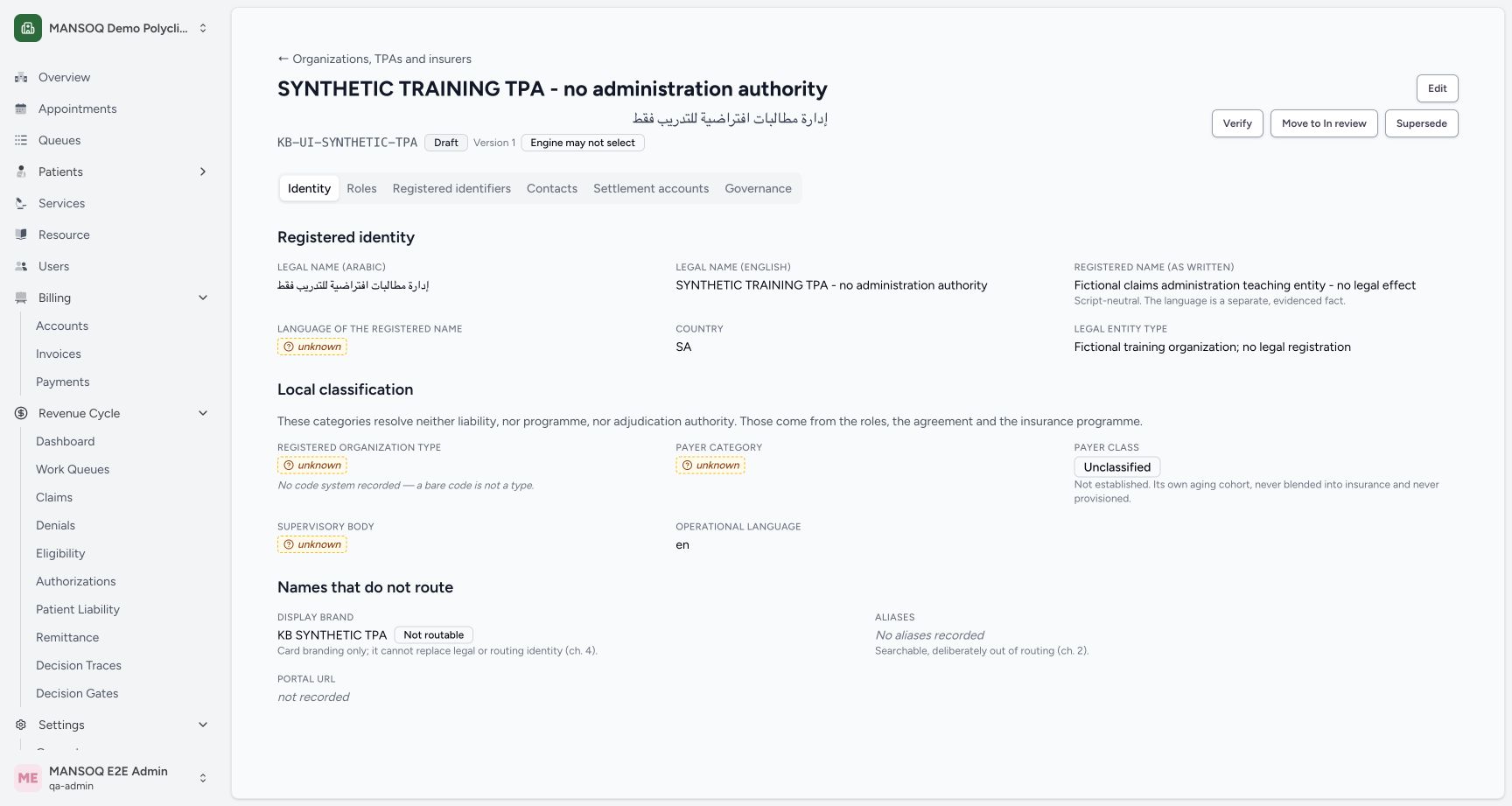
Create or locate the TPA identity, then establish its own role and evidence. The demonstration saved a separate bilingual draft with non-routable branding and unknown classifications; no administration authority was inferred.
 123
123- Distinct organization: The insurer and administrator are separate entities.
- Administrator legal name: A TPA display name grants no delegated function.
- Unclassified local category: No legal classification is inferred from a brand.
 123
123- Draft and not selected: Saved identity is not operational authority.
- Local class unresolved: Unclassified is not a commercial-insurer conclusion.
- Brand does not route: Searchable branding is separate from role-qualified routing identity.
5. Model delegation and settlement facts explicitly
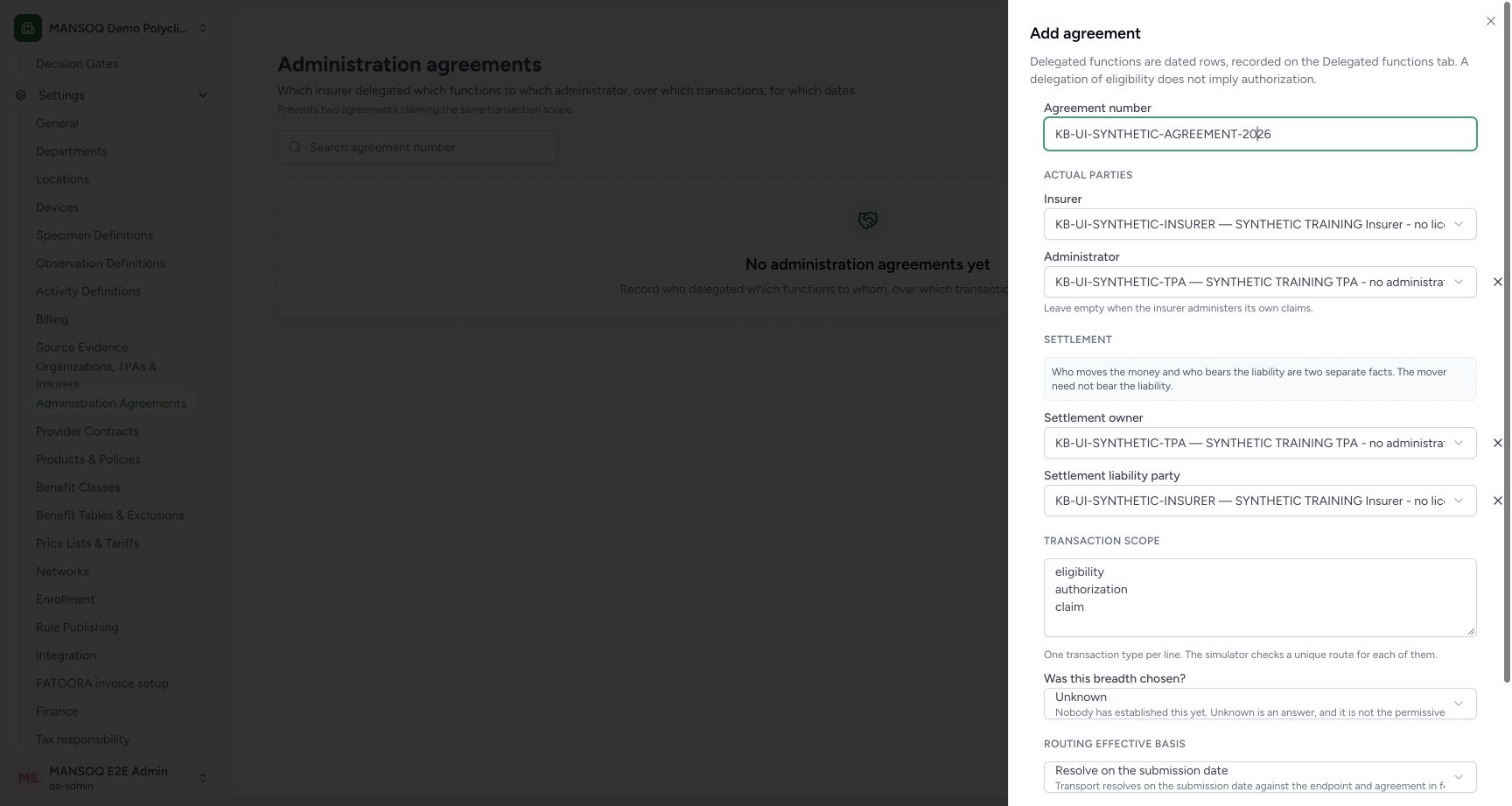
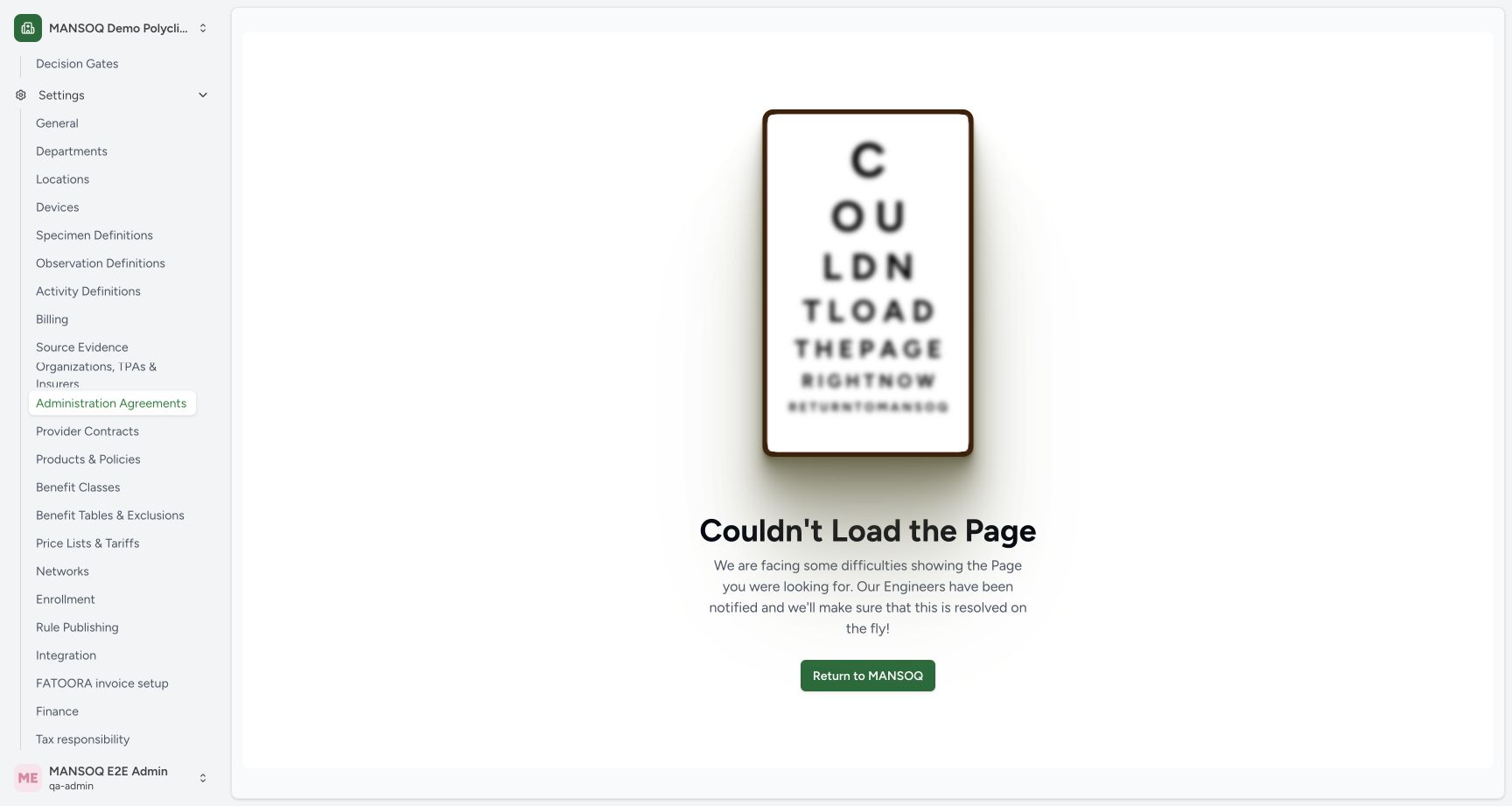
In Administration Agreements, distinguish insurer, administrator, settlement mover, liability party, transaction scope and routing date basis. The current form also omits required row effective_from, so its save failed. A separate normal validated API continuation supplied dates and retained a draft. Each actual delegated function and production scope still needs its own evidence.
 1234
1234- Insurer and administrator: Eligibility delegation does not imply authorization or claims delegation.
- Settlement mover: Who moves money is separate from who owes the liability.
- Liability party: Do not substitute the administrator automatically.
- Explicit transaction scope: Each transaction must resolve its own delegation.
 1
1- Failed UI save: Inspect the saved state and API refusal before retrying.
Source evidence
References are pinned to the private MANSOQ source repository. Repository access is required to open these links.
- repositories/platform/mansoq-web/src/pages/Facility/settings/rcm/parties/organizations/OrganizationForm.tsx:1 · f6e9f05f
- repositories/platform/mansoq-web/src/pages/Facility/settings/rcm/parties/organizations/OrganizationRoles.tsx:280 · f6e9f05f
- repositories/platform/mansoq-web/src/pages/Facility/settings/rcm/parties/organizations/OrganizationIdentifiers.tsx:1 · f6e9f05f
- repositories/platform/mansoq-web/src/pages/Facility/settings/rcm/parties/agreements/AgreementForm.tsx:54 · f6e9f05f
- repositories/platform/mansoq-core/mansoq/emr/api/viewsets/rcm/organization.py:530 · f6e9f05f