 MANSOQ
 RCM & insurance
Retain, independently review and recover insurance source evidence
Follow actual retained-file integrity, separate content review and the failure of a legacy placeholder source.
Current source · Source reviewed; exact stated local synthetic UI/API continuation and independent readback observed · 10 min read
Before you begin
- Use a separate synthetic training estate and authorized maker/reviewer accounts for demonstrations. For production, use the actual approved organizational and contract sources.
1. Prepare distinct source provenance
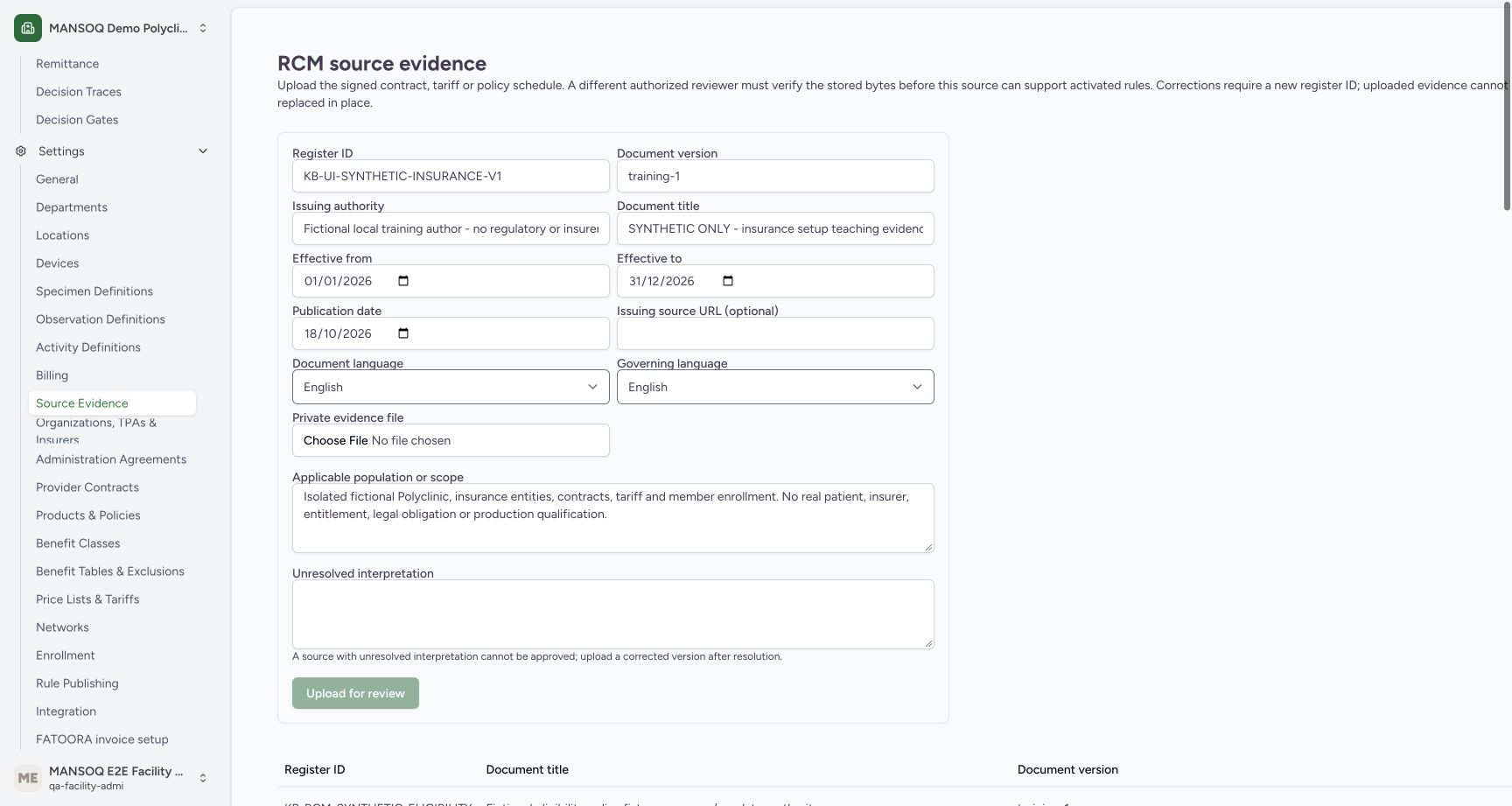
Open Settings → Source Evidence. Enter register ID, document version, issuing authority/title, publication date, effective period, document language and governing language. Record scope and unresolved interpretation. The prepared example has no selected file and is not upload success.
 123
123- Unique register and version: Use a new register ID for a corrected file.
- Separate effective period: Publication and effective dates are distinct.
- Private file selection: This frame says No file chosen; it is not upload-success evidence.
2. Store the actual private file
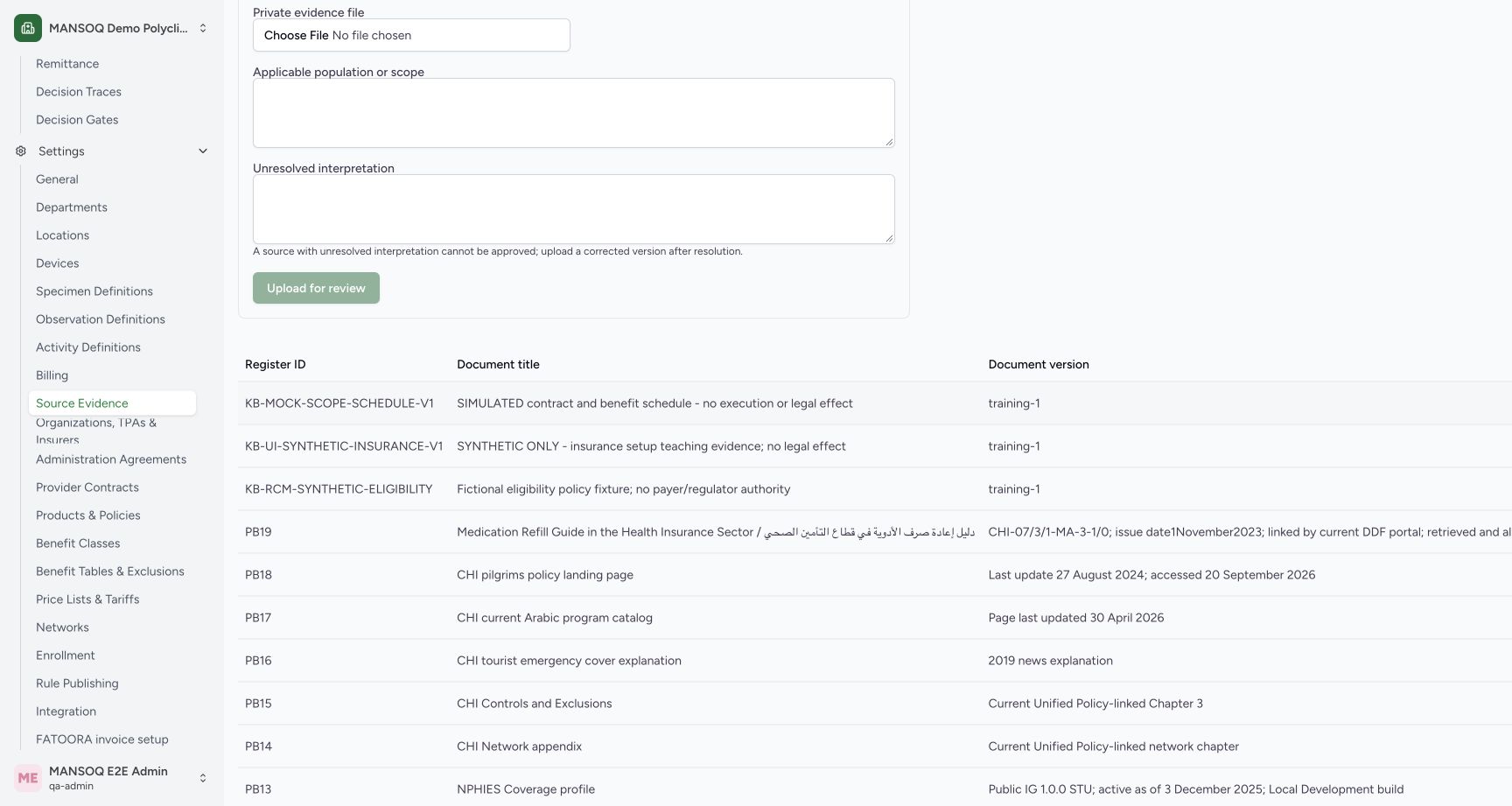
Choose the PDF/DOCX/XLSX source and use Upload for review. In this demonstration, the Chrome file picker was unavailable, so the operator used the same normal authenticated multipart product endpoint; the retained PDF hash was independently compared to the local file. No successful UI file-selection action is claimed.
 12
12- Register identity: Match register ID and document version before opening.
- Fictional scope: The document is a local test fixture with no legal effect.
3. Inspect retained contents as a different reviewer
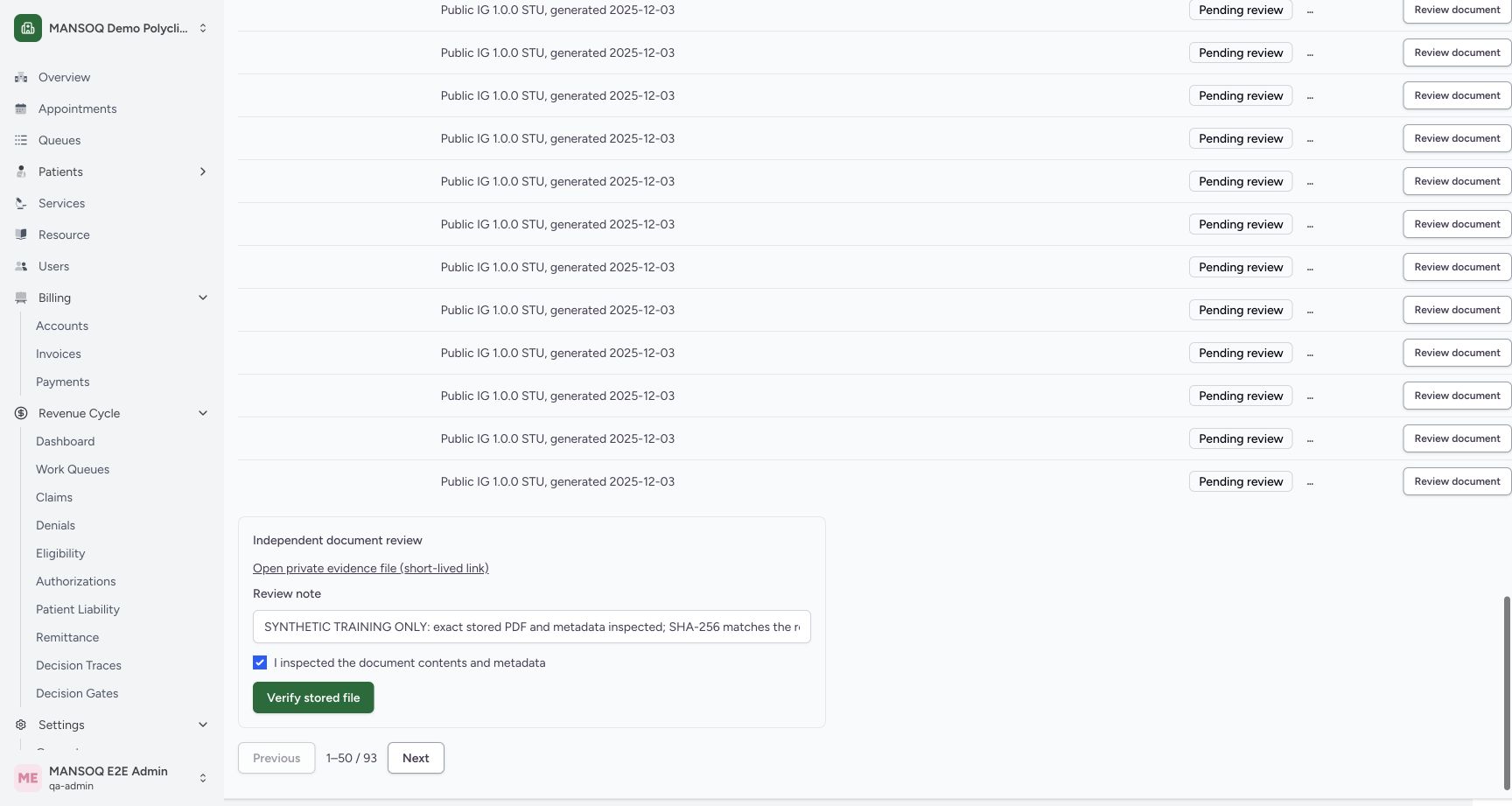
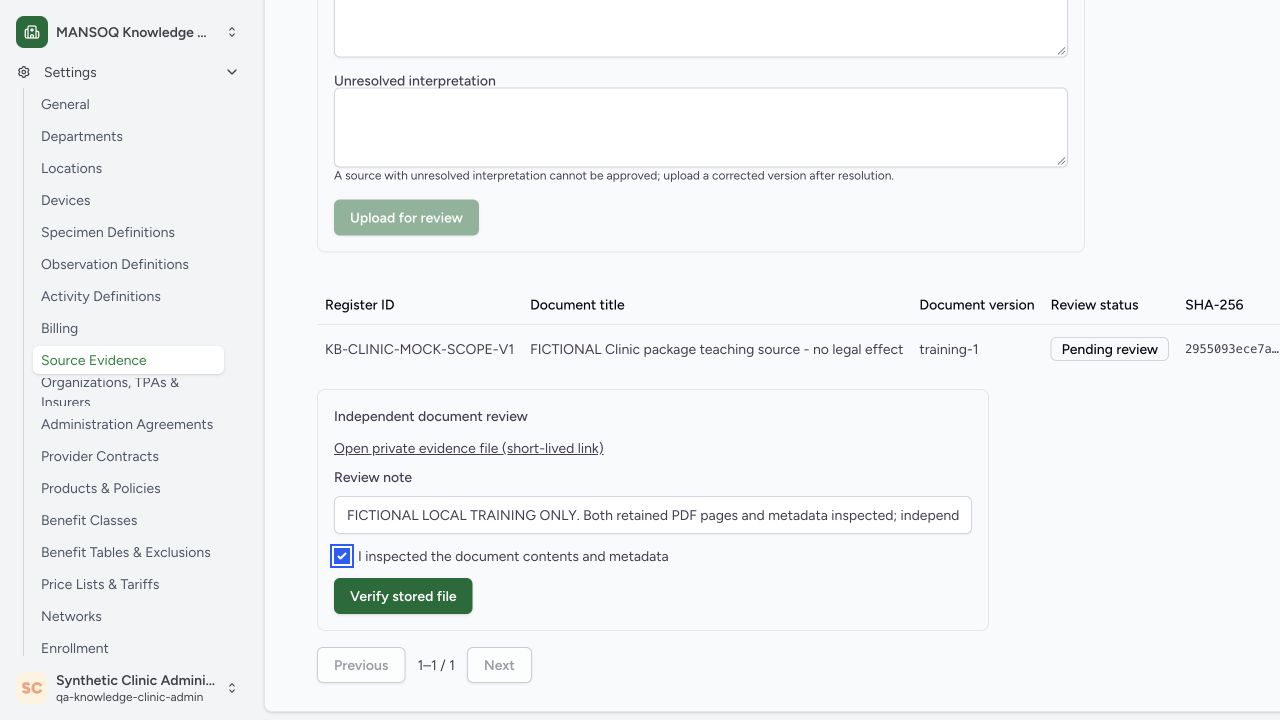
Sign in as a different authorized reviewer. Open the private short-lived document link, inspect the actual contents and metadata, supply an honest note and check the contents attestation. The fictional example expressly denies legal, insurer and regulatory authority.
 1234
1234- Open retained document: Inspect actual contents, not just a title or a checksum.
- Review note: Record scope, source and unresolved interpretation.
- Contents attestation: Check only after inspecting contents and metadata.
- Verify stored file: Normal server checks verify stored bytes and separate reviewer.
 1234
1234- Open retained private document: Inspect the stored contents and metadata.
- Scoped review note: Record actual inspected evidence and its limitations.
- Contents attestation: Only after actual inspection.
- Verify stored file: Normal server verification retains separate reviewer identity.
4. Verify the stored file and read back its identity
Use Verify stored file. Match register ID, version and full SHA-256, and retain the named reviewer and review time. Independently fetched bytes confirmed both fictional PDFs after restart; verification describes local integrity, not legal effect.
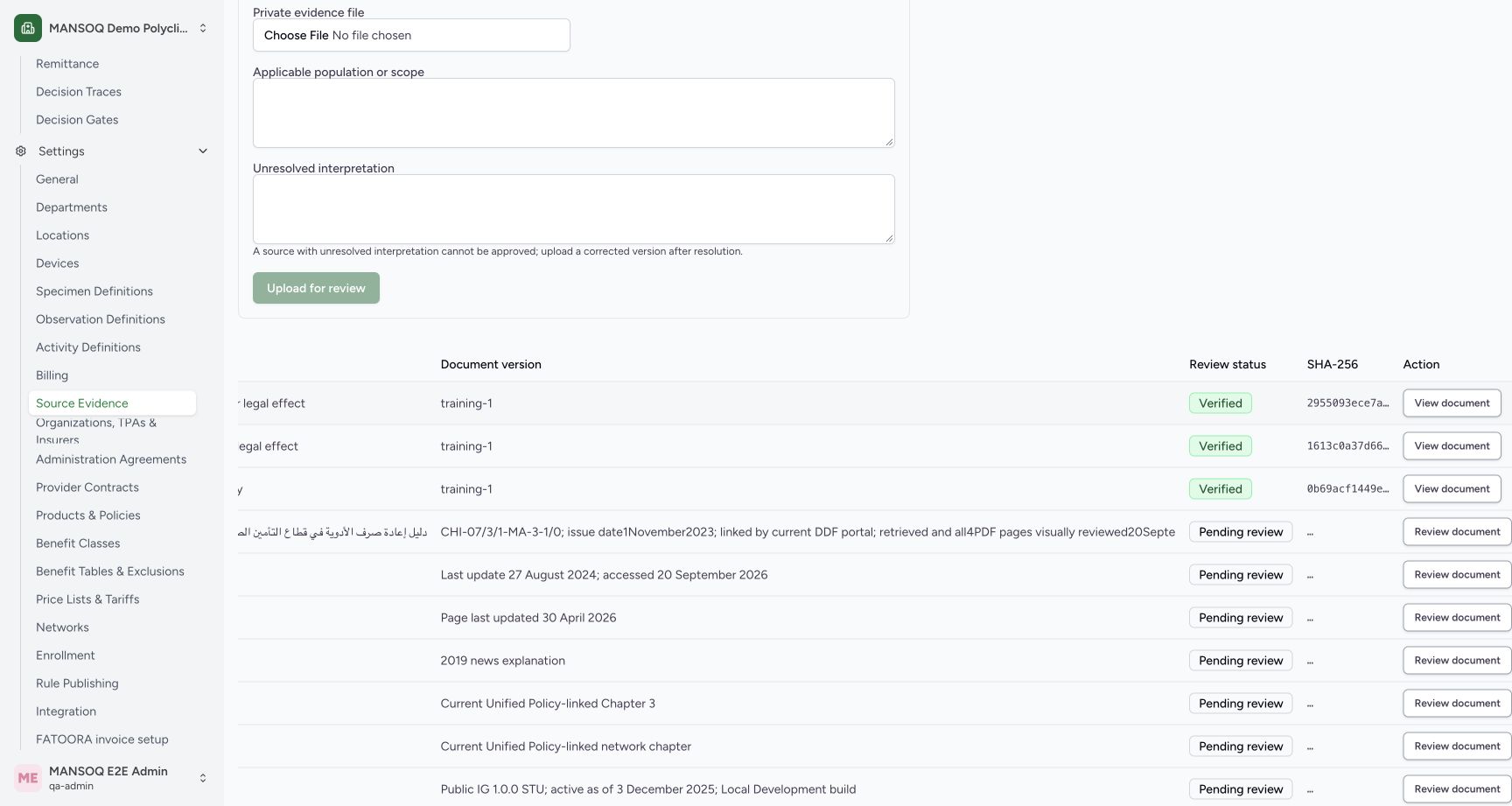 12
12- Separate review saved: This records local content and byte verification.
- Digest prefix: Compare the complete saved SHA-256 through authorized evidence inspection.
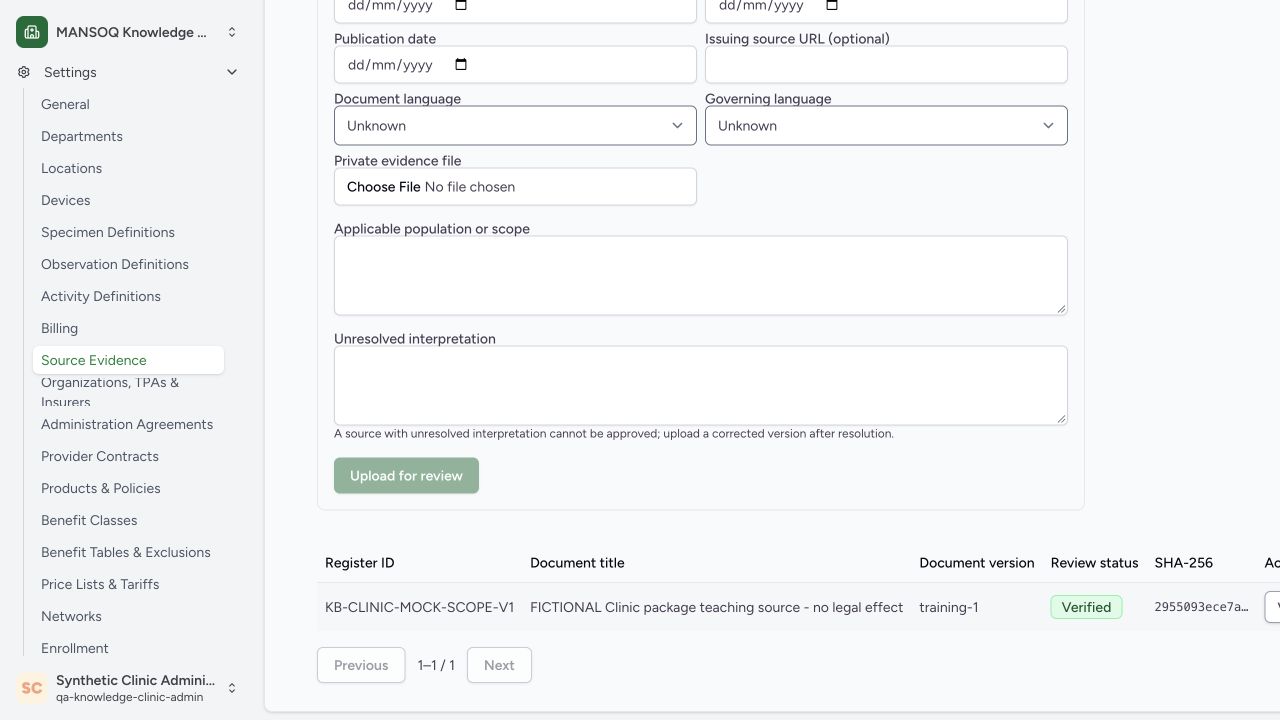 12
12- Verified saved: Separate reviewer and actual retained bytes were independently confirmed.
- Exact register: Use this source ID in the isolated Clinic only.
5. Investigate a flag with no readable source
Do not trust a Verified flag alone. The preserved legacy synthetic:// eligibility source fails SOURCE_STORAGE_UNAVAILABLE during current retained-byte qualification. Restore the actual approved retained document through supported evidence/version procedures; never invent bytes or alter a digest to force a pass.
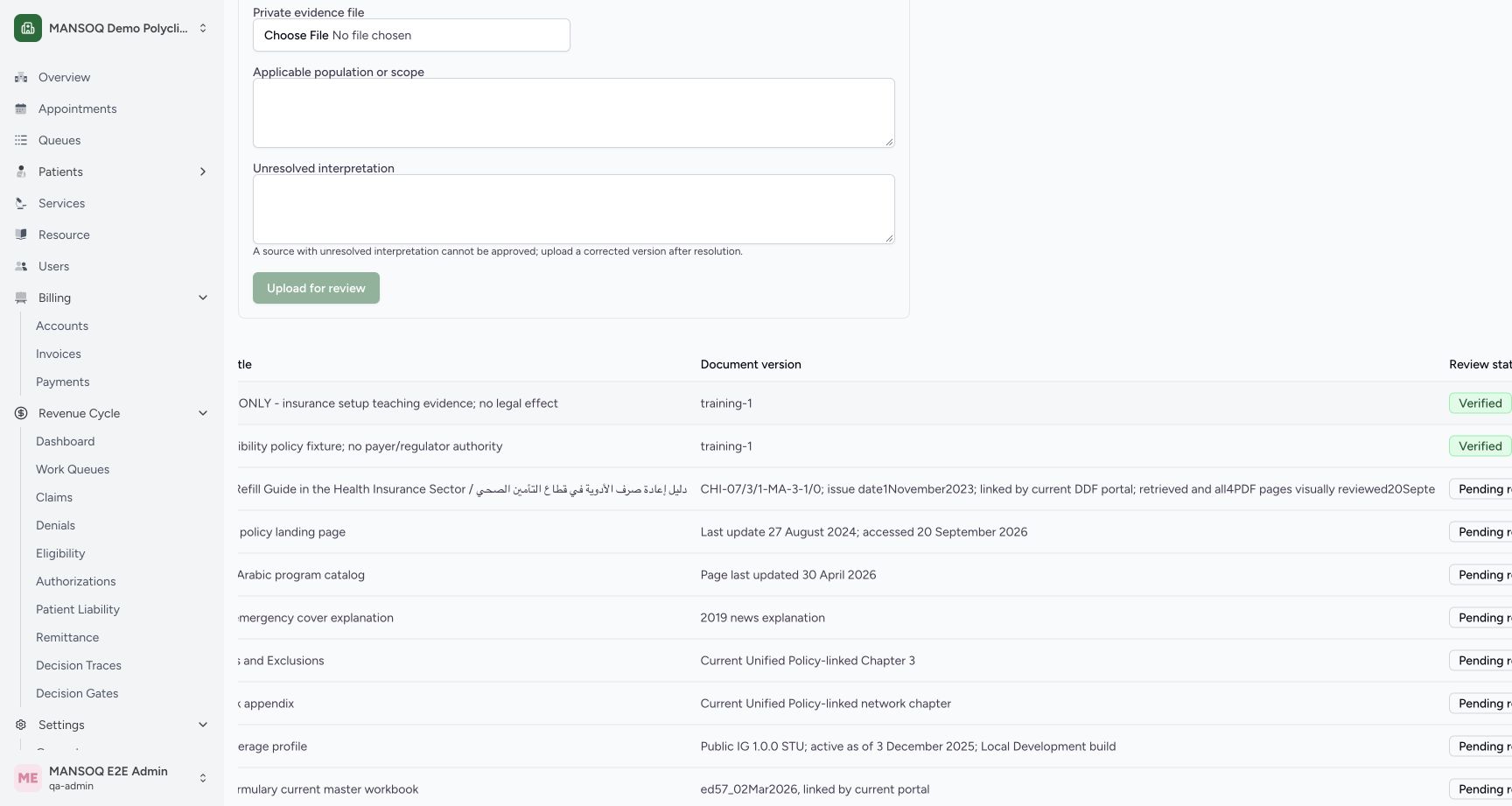 12
12- New retained PDF verified: Its matching actual bytes were independently read back.
- Legacy flag is insufficient: Stored-byte qualification must still pass for legacy placeholder fixtures.
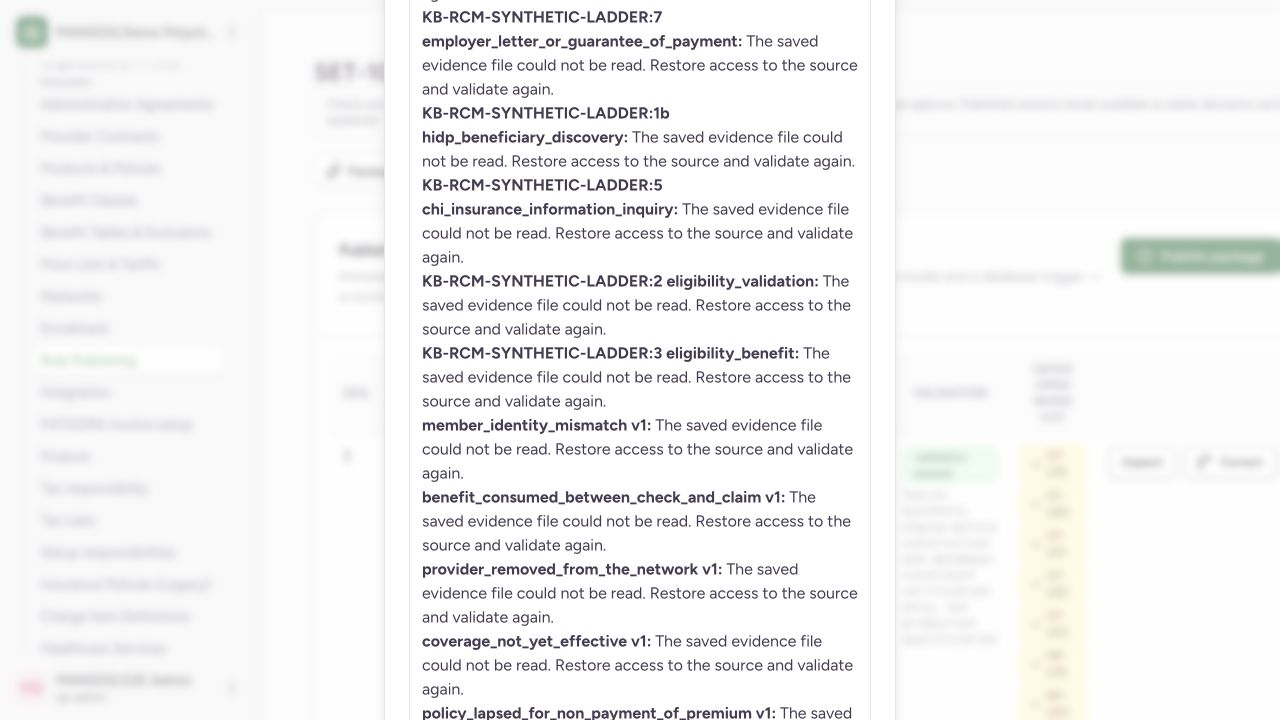 12
12- Readable source required: A saved review flag alone cannot replace retained content.
- Each row retains a finding: Keep the full authenticated qualification report for investigation.
Source evidence
References are pinned to the private MANSOQ source repository. Repository access is required to open these links.