 MANSOQ
IT & Integrations · VERSION 912828b3
Read authenticated logout and its supplied-pair scope
Read both required token fields, exact empty-object responses and the limits of this base logout operation.
IT administrator · Integration engineer · Developer
 12345
Read the authenticated logout inputs
Capture details
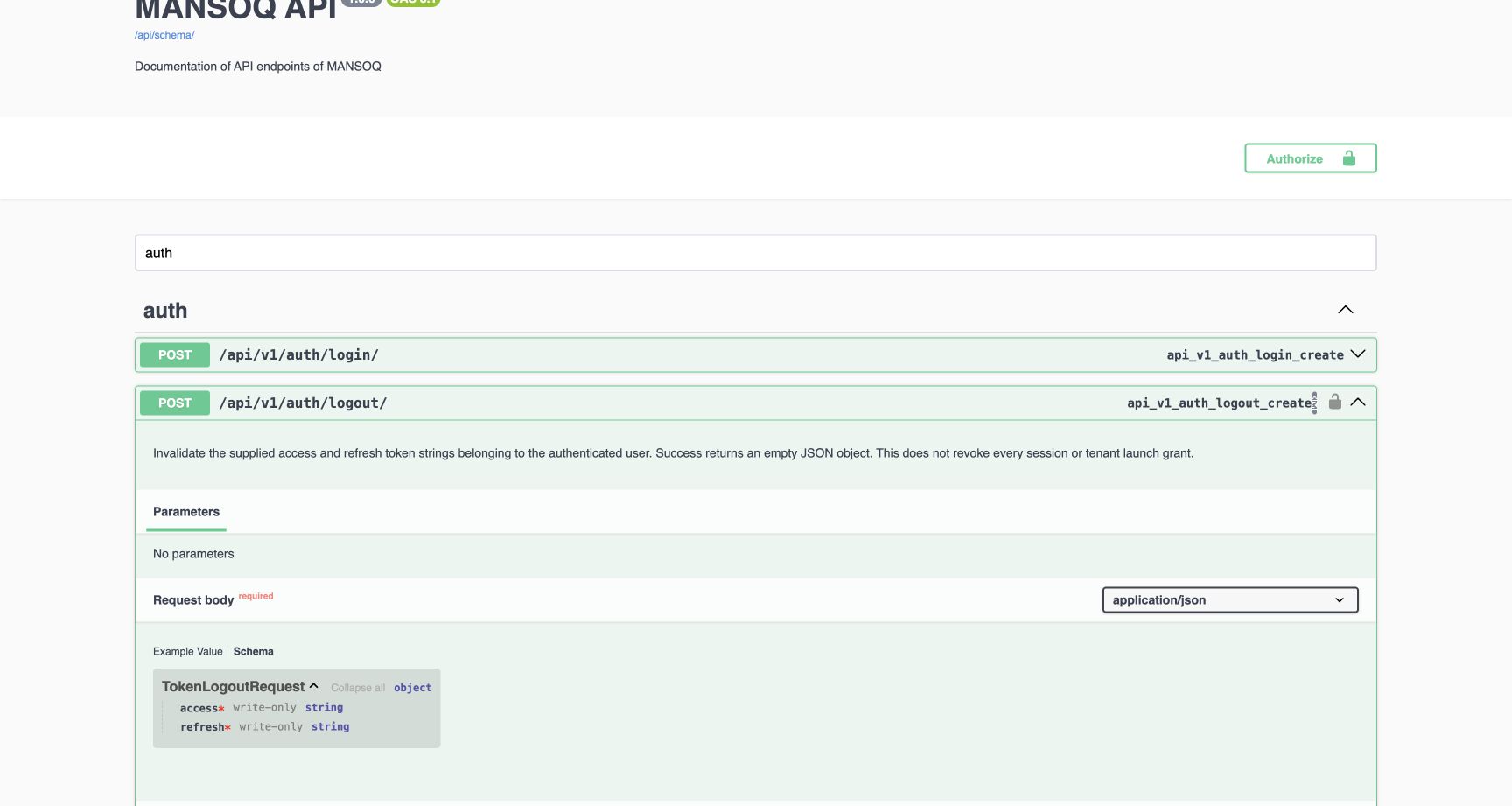
Fresh genuine 1728×921 Chrome capture of the exact committed 912828b3 read-only API reference. No credentials were entered or endpoint requests submitted. The logout path has a security marker and describes invalidation of the supplied access/refresh strings for the authenticated user. It explicitly does not revoke every session or tenant launch grant. Both request fields are required write-only strings.
Image SHA-256 0bcf62a630110a9ee8d180ce668e3ac0a1d6f219c81ce1ba0974b1b7a71f47e0
- Exact logout path: This operation differs from refreshing or verifying a token.
- Authentication is required: The security marker does not indicate credentials were entered in the viewer.
- Supplied tokens only: Read the limited revocation scope before integrating logout.
- Required access string: Use the access field belonging to the authenticated user.
- Required refresh string: The request also requires the user’s refresh field.
 12345
Compare empty logout success and failure definitions
Capture details
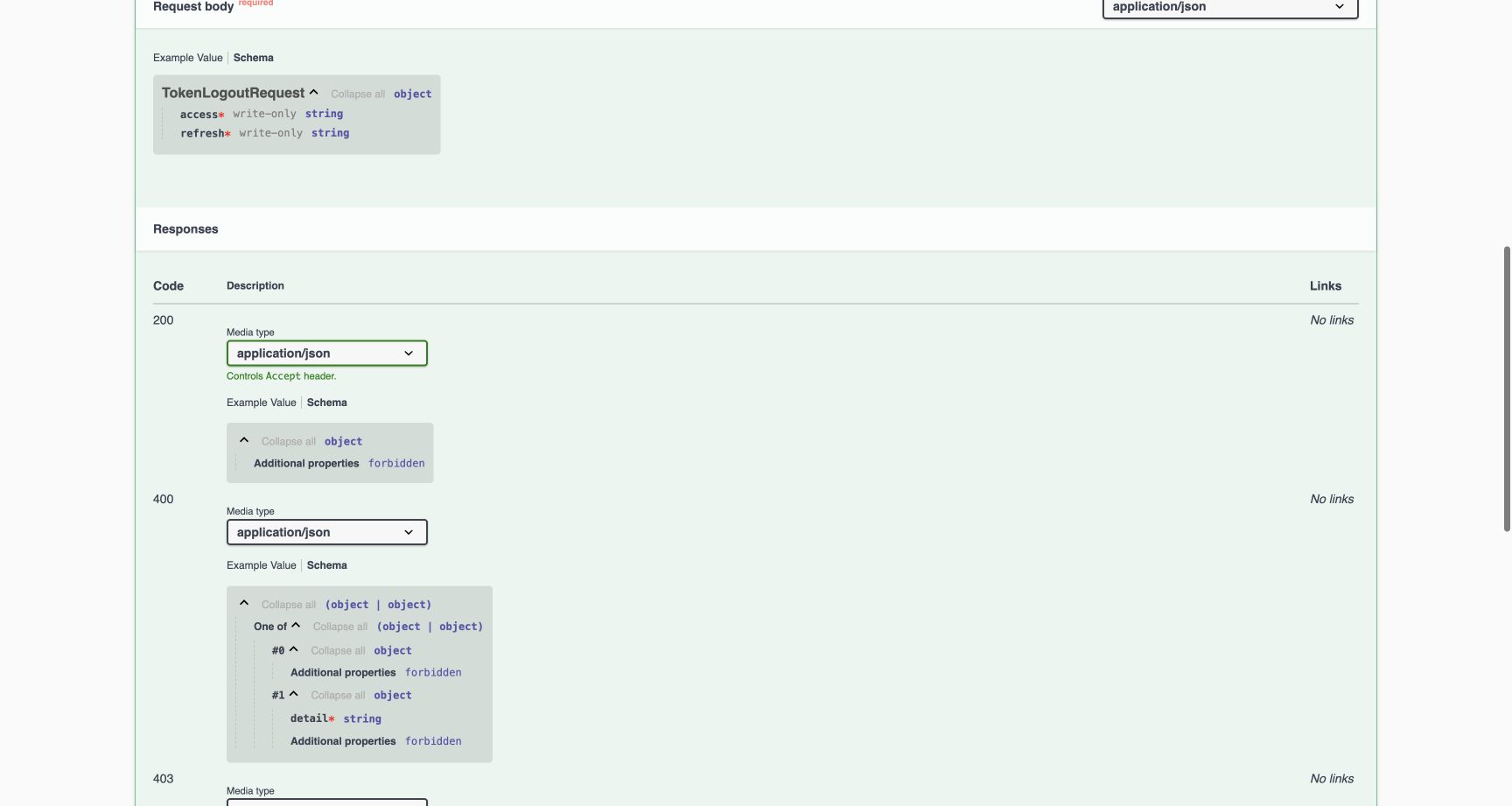
Fresh genuine 1728×921 Chrome capture of the exact committed 912828b3 read-only API reference. No credentials were entered or endpoint requests submitted. Both required logout input types are visible. HTTP 200 is an object with no properties and additional properties forbidden. The separate 400 union can also contain an empty object, so status matters.
Image SHA-256 74bb439afd12a638c515e49884a5d46db35c54fa4b3cf4d0209a888e90364586
- Required access: This is a write-only request type, not an exposed token.
- Required refresh: Both documented inputs are needed.
- Successful HTTP status: An exact empty JSON object under 200 is the success contract.
- Empty object only: Additional properties are forbidden in the success response.
- Separate failure code: The same empty-object shape can occur under a failure status.
 1234567
Read logout’s 400 and 403 alternatives
Capture details
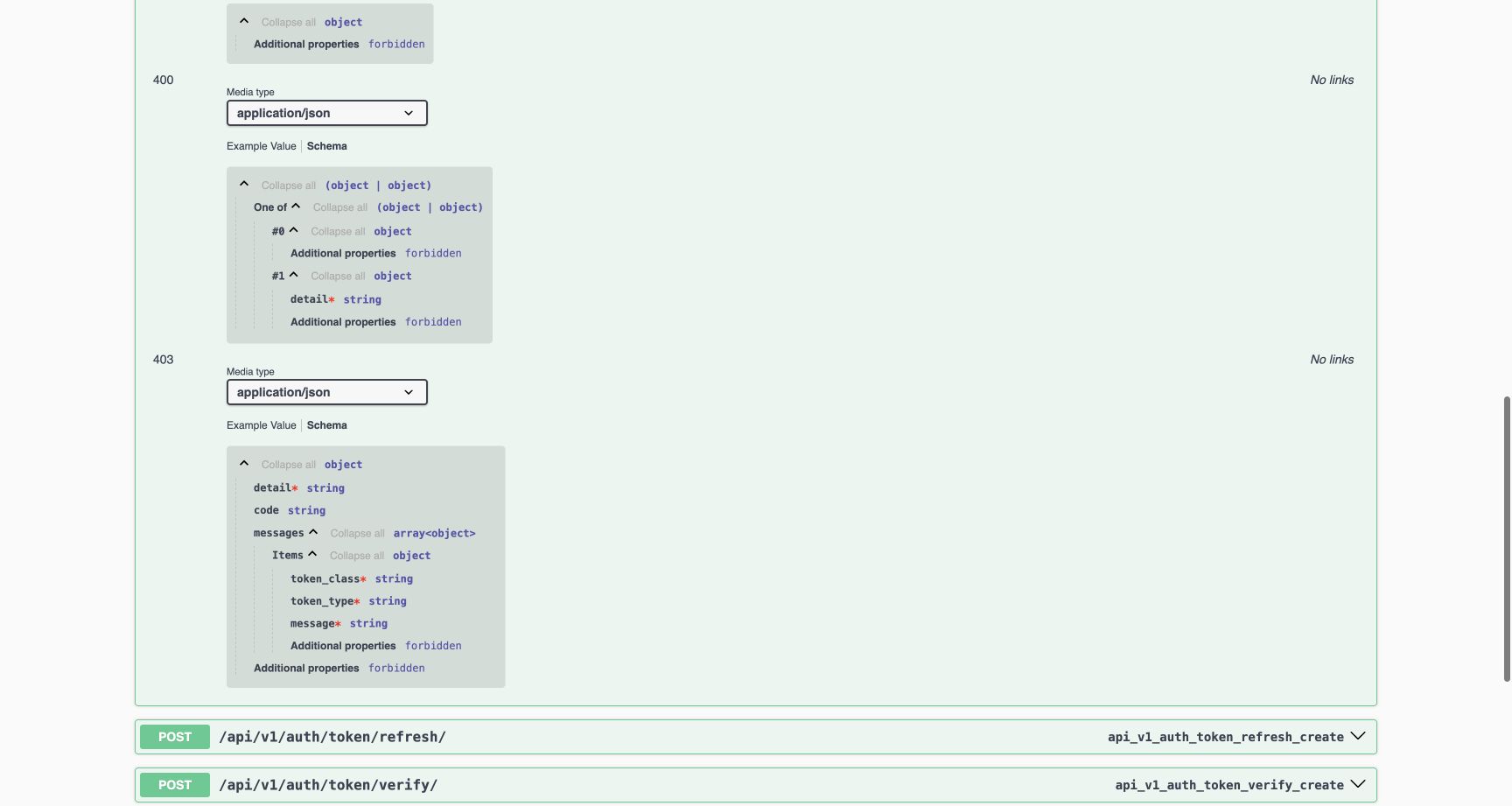
Fresh genuine 1728×921 Chrome capture of the exact committed 912828b3 read-only API reference. No credentials were entered or endpoint requests submitted. The expanded 400 union contains an exact empty object or a required detail string. HTTP 403 requires detail, while code and messages are optional; each supplied messages item has required token_class, token_type and message strings.
Image SHA-256 e50570969b42e73bed2d79466d61ed69a02464159218935a3a41918eb1c9fa82
- Logout failure 400: Inspect the union instead of assuming every error has the same shape.
- Empty-object failure: This alternative has no properties and forbids additional ones.
- Required detail alternative: The other 400 alternative requires detail.
- Authentication refusal 403: This base profile documents auth refusal at 403.
- Required detail: The star marks detail as required.
- Optional message list: Code and messages have no required marker at this level.
- Typed message items: When a message item is present, its three displayed string fields are required.
6 of 6 content blocks have reviewed image alignment. Missing overview or prerequisite images remain open.
Before you begin
- Use the reference for release 912828b3. Its source receipt and schema fingerprint identify this local documentation export; the API label and schema dialect are separate.
 1234567
Recorded release 912828b3 · 2026-10-19 · 1728 × 921 Compare the exact documentation source
Capture details
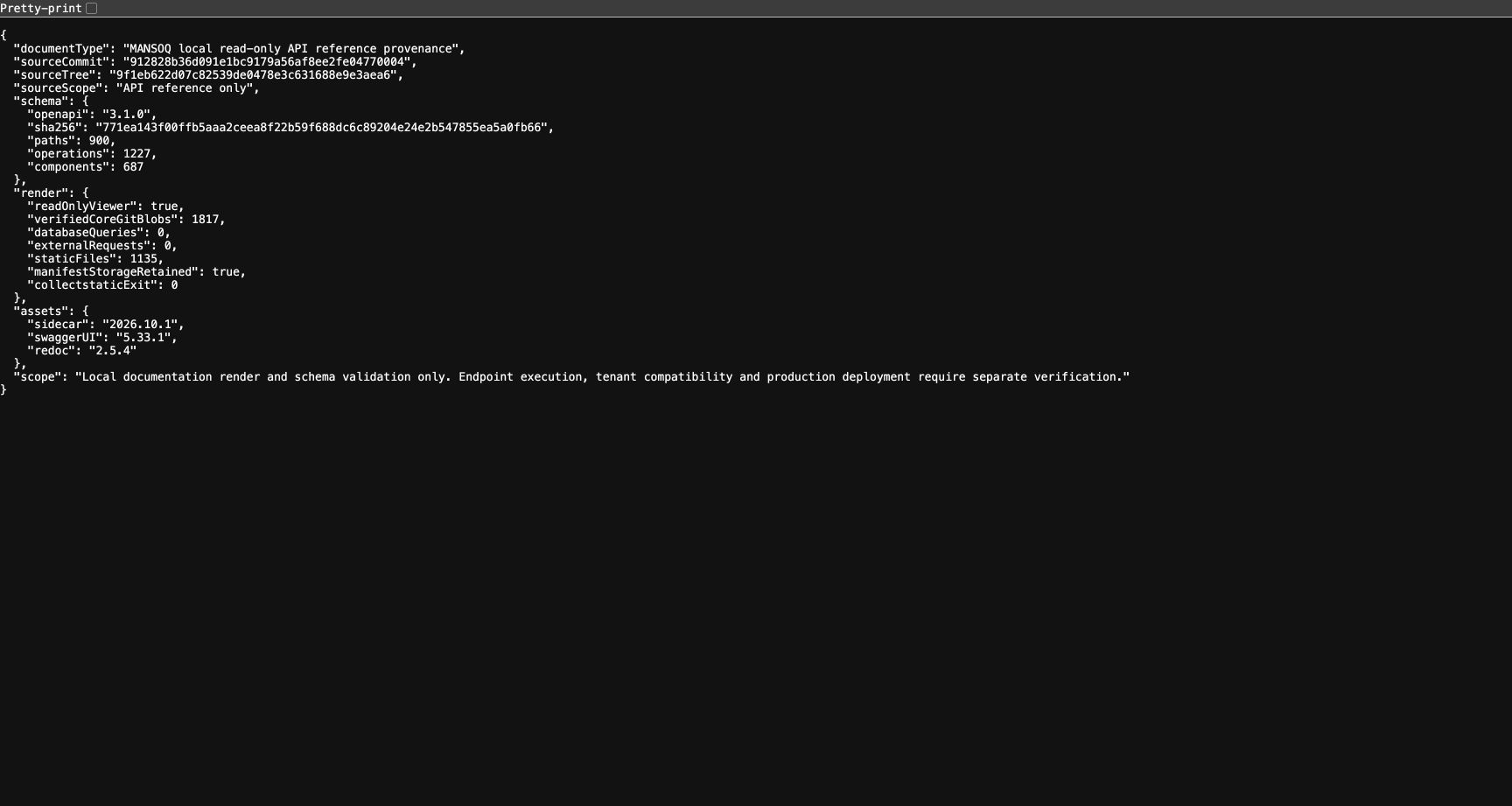
Fresh genuine 1728×921 Chrome capture of the exact committed 912828b3 read-only API reference. No credentials were entered or endpoint requests submitted. The genuine privacy-minimized local documentation receipt shows full release 912828b3 commit/tree, OpenAPI 3.1, its schema fingerprint, 900 paths, 1,227 operations, 687 schema components and verified read-only zero-query rendering. It contains no local filesystem path.
Image SHA-256
99de6c8b2ce55151bb26d366204657af1b66c26e48742b8502ba5f5b60bd54a2- Full committed release: Compare the exact sourceCommit, not only a short label.
- Source tree: This is the retained committed Git tree.
- Exact schema fingerprint: Compare the complete SHA256 with the selected schema artifact.
- Read-only viewer: This describes documentation browsing, not request execution.
- Verified source count: All 1,817 core source blobs were checked against this release.
- Zero data queries: The documentation export did not query application data.
- Bounded scope: Endpoint execution, tenant compatibility and production deployment need separate evidence.
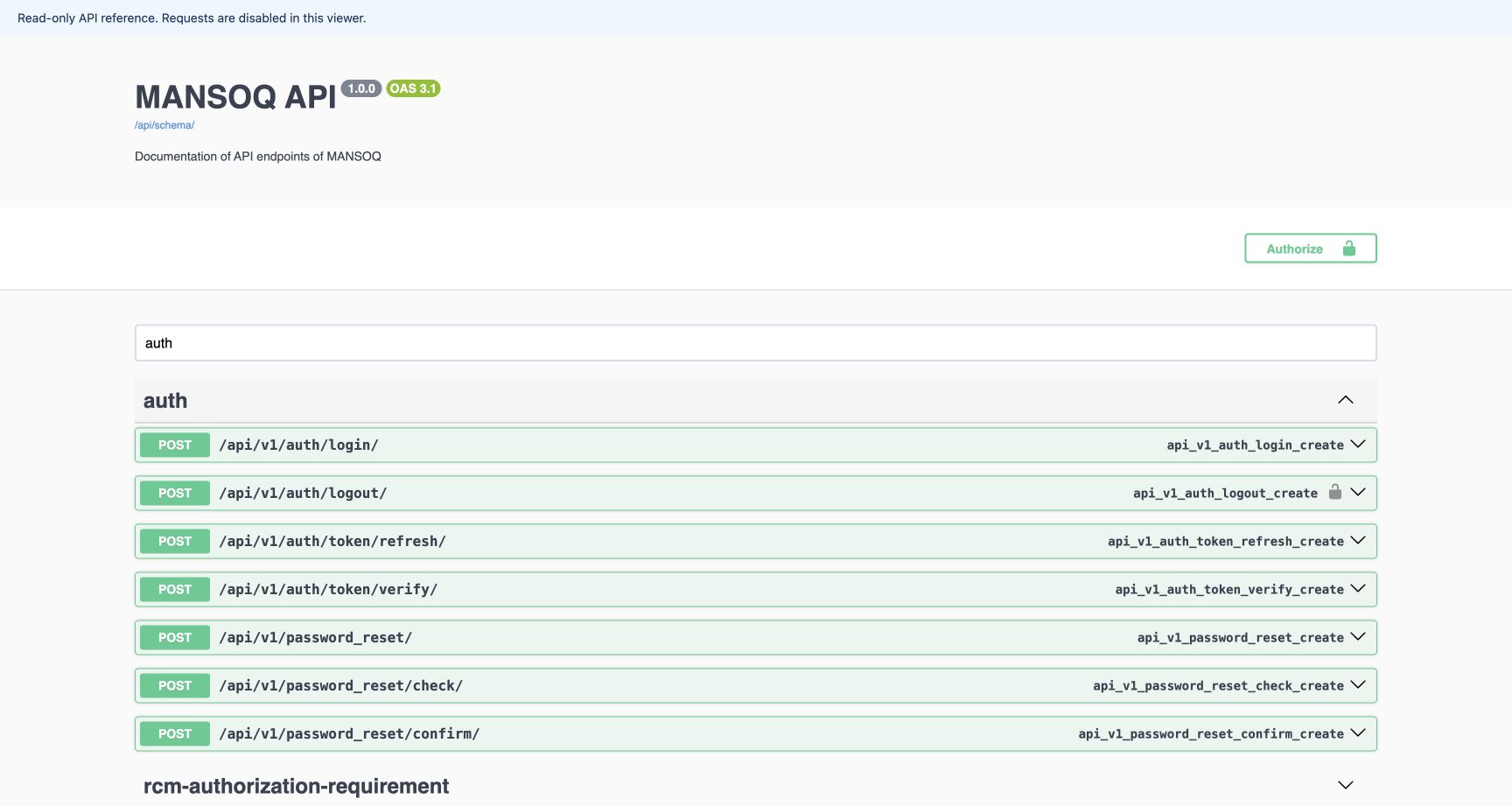 1234567
Recorded release 912828b3 · 2026-10-19 · 1728 × 921 Find the three auth operations safely
Capture details
Fresh genuine 1728×921 Chrome capture of the exact committed 912828b3 read-only API reference. No credentials were entered or endpoint requests submitted. The installed read-only Swagger reader shows the separate API 1.0.0 and OAS 3.1 labels and the auth operation group. Logout has a security marker; refresh and verify are separate paths. No credentials were entered.
Image SHA-256
b3a5df58e18c5f9c47e13754d34a9c3a500c21ce9cba800d21c786967d28f23a- Requests disabled: The reference banner states that requests are disabled.
- API label and dialect: API 1.0.0 and OAS 3.1 are separate from the Git release in the source receipt.
- Filter the auth group: Use the group filter to locate authentication contracts.
- Authenticated logout: Read this path separately from refresh and verify.
- Security requirement: The lock indicates that the logout operation declares authentication, not that this viewer has signed in.
- Refresh contract: Read the required input and rotation-specific response here.
- Verification contract: Read the limited token-validation contract here.
- The reference is read-only. These frames show contract types and examples, not credentials or live request results. Actual calls and deployment-specific authorization require their own verified workflow.1234567
Recorded release 912828b3 · 2026-10-19 · 1728 × 921 Find the three auth operations safely
Capture details
Fresh genuine 1728×921 Chrome capture of the exact committed 912828b3 read-only API reference. No credentials were entered or endpoint requests submitted. The installed read-only Swagger reader shows the separate API 1.0.0 and OAS 3.1 labels and the auth operation group. Logout has a security marker; refresh and verify are separate paths. No credentials were entered.
Image SHA-256
b3a5df58e18c5f9c47e13754d34a9c3a500c21ce9cba800d21c786967d28f23a- Requests disabled: The reference banner states that requests are disabled.
- API label and dialect: API 1.0.0 and OAS 3.1 are separate from the Git release in the source receipt.
- Filter the auth group: Use the group filter to locate authentication contracts.
- Authenticated logout: Read this path separately from refresh and verify.
- Security requirement: The lock indicates that the logout operation declares authentication, not that this viewer has signed in.
- Refresh contract: Read the required input and rotation-specific response here.
- Verification contract: Read the limited token-validation contract here.
12345Recorded release 912828b3 · 2026-10-19 · 1728 × 921 Read the authenticated logout inputs
Capture details
Fresh genuine 1728×921 Chrome capture of the exact committed 912828b3 read-only API reference. No credentials were entered or endpoint requests submitted. The logout path has a security marker and describes invalidation of the supplied access/refresh strings for the authenticated user. It explicitly does not revoke every session or tenant launch grant. Both request fields are required write-only strings.
Image SHA-256
0bcf62a630110a9ee8d180ce668e3ac0a1d6f219c81ce1ba0974b1b7a71f47e0- Exact logout path: This operation differs from refreshing or verifying a token.
- Authentication is required: The security marker does not indicate credentials were entered in the viewer.
- Supplied tokens only: Read the limited revocation scope before integrating logout.
- Required access string: Use the access field belonging to the authenticated user.
- Required refresh string: The request also requires the user’s refresh field.
12345Recorded release 912828b3 · 2026-10-19 · 1728 × 921 Compare empty logout success and failure definitions
Capture details
Fresh genuine 1728×921 Chrome capture of the exact committed 912828b3 read-only API reference. No credentials were entered or endpoint requests submitted. Both required logout input types are visible. HTTP 200 is an object with no properties and additional properties forbidden. The separate 400 union can also contain an empty object, so status matters.
Image SHA-256
74bb439afd12a638c515e49884a5d46db35c54fa4b3cf4d0209a888e90364586- Required access: This is a write-only request type, not an exposed token.
- Required refresh: Both documented inputs are needed.
- Successful HTTP status: An exact empty JSON object under 200 is the success contract.
- Empty object only: Additional properties are forbidden in the success response.
- Separate failure code: The same empty-object shape can occur under a failure status.
1. Read the authenticated request and success
Open POST /api/v1/auth/logout/. The operation’s security marker indicates authentication is required. Request Schema requires both write-only access and refresh strings, and both supplied tokens must belong to the authenticated user. Response 200 is exactly an empty JSON object. The viewer remains read-only and contains no actual token values.
12345Read the authenticated logout inputs
Capture details
Fresh genuine 1728×921 Chrome capture of the exact committed 912828b3 read-only API reference. No credentials were entered or endpoint requests submitted. The logout path has a security marker and describes invalidation of the supplied access/refresh strings for the authenticated user. It explicitly does not revoke every session or tenant launch grant. Both request fields are required write-only strings.
Image SHA-256 0bcf62a630110a9ee8d180ce668e3ac0a1d6f219c81ce1ba0974b1b7a71f47e0
- Exact logout path: This operation differs from refreshing or verifying a token.
- Authentication is required: The security marker does not indicate credentials were entered in the viewer.
- Supplied tokens only: Read the limited revocation scope before integrating logout.
- Required access string: Use the access field belonging to the authenticated user.
- Required refresh string: The request also requires the user’s refresh field.
12345Compare empty logout success and failure definitions
Capture details
Fresh genuine 1728×921 Chrome capture of the exact committed 912828b3 read-only API reference. No credentials were entered or endpoint requests submitted. Both required logout input types are visible. HTTP 200 is an object with no properties and additional properties forbidden. The separate 400 union can also contain an empty object, so status matters.
Image SHA-256 74bb439afd12a638c515e49884a5d46db35c54fa4b3cf4d0209a888e90364586
- Required access: This is a write-only request type, not an exposed token.
- Required refresh: Both documented inputs are needed.
- Successful HTTP status: An exact empty JSON object under 200 is the success contract.
- Empty object only: Additional properties are forbidden in the success response.
- Separate failure code: The same empty-object shape can occur under a failure status.
2. Distinguish refused logout from a successful result
Expand HTTP 400 and 403. Missing token fields return a detail object; other invalid supplied-pair failures can return an empty object with HTTP 400. Authentication refusals are documented at HTTP 403 in this base profile. An empty JSON object alone does not prove success: inspect its HTTP status too.
1234567Read logout’s 400 and 403 alternatives
Capture details
Fresh genuine 1728×921 Chrome capture of the exact committed 912828b3 read-only API reference. No credentials were entered or endpoint requests submitted. The expanded 400 union contains an exact empty object or a required detail string. HTTP 403 requires detail, while code and messages are optional; each supplied messages item has required token_class, token_type and message strings.
Image SHA-256 e50570969b42e73bed2d79466d61ed69a02464159218935a3a41918eb1c9fa82
- Logout failure 400: Inspect the union instead of assuming every error has the same shape.
- Empty-object failure: This alternative has no properties and forbids additional ones.
- Required detail alternative: The other 400 alternative requires detail.
- Authentication refusal 403: This base profile documents auth refusal at 403.
- Required detail: The star marks detail as required.
- Optional message list: Code and messages have no required marker at this level.
- Typed message items: When a message item is present, its three displayed string fields are required.
3. Keep the revocation claim limited to the supplied pair
Read the description before integrating logout. This operation invalidates the supplied access and refresh token strings for the authenticated user; it does not revoke every session or tenant launch grant. A separate normal local check confirmed the supplied pair was refused afterward while an independent control pair remained usable. Each pair created for that local check was subsequently submitted to the same logout operation. Service-account Token credentials use their separate revocation workflow.
12345Read the authenticated logout inputs
Capture details
Fresh genuine 1728×921 Chrome capture of the exact committed 912828b3 read-only API reference. No credentials were entered or endpoint requests submitted. The logout path has a security marker and describes invalidation of the supplied access/refresh strings for the authenticated user. It explicitly does not revoke every session or tenant launch grant. Both request fields are required write-only strings.
Image SHA-256 0bcf62a630110a9ee8d180ce668e3ac0a1d6f219c81ce1ba0974b1b7a71f47e0
- Exact logout path: This operation differs from refreshing or verifying a token.
- Authentication is required: The security marker does not indicate credentials were entered in the viewer.
- Supplied tokens only: Read the limited revocation scope before integrating logout.
- Required access string: Use the access field belonging to the authenticated user.
- Required refresh string: The request also requires the user’s refresh field.
Source evidence
Every citation uses this exact committed version. The private source repository requires access.
- repositories/platform/mansoq-core/config/auth_views.py:195 ·
912828b36d091e1bc9179a56af8ee2fe04770004Source file checksum
2f6466c03f5102a08bf18968bf240dcd34f8c9f9b69311b0499e1c32765cb6e1 - repositories/platform/mansoq-core/config/authentication.py:14 ·
912828b36d091e1bc9179a56af8ee2fe04770004Source file checksum
532bb63371c2a4c4e922b757188ae0056afc36db0b840136dda61e9bb9229875 - repositories/platform/mansoq-core/config/settings/base.py:416 ·
912828b36d091e1bc9179a56af8ee2fe04770004Source file checksum
34f8931a2bae5a35f45bf6247695ee6bac09ccada3be766773861b4245817d6f - repositories/platform/mansoq-core/config/urls.py:35 ·
912828b36d091e1bc9179a56af8ee2fe04770004Source file checksum
14593164ca85aed7c7e6926b744fb87058c7d70fd43f1e3eb5a54a71bea12023 - repositories/platform/mansoq-core/config/documentation.py:7 ·
912828b36d091e1bc9179a56af8ee2fe04770004Source file checksum
b79f1c087f7d49823e12aa2f91661fbba1ab19c7d94fb86c3281e2edacfe23a0 - repositories/platform/mansoq-core/mansoq/emr/tests/test_auth_token_contracts.py:95 ·
912828b36d091e1bc9179a56af8ee2fe04770004Source file checksum
61c26be02e14e7150493aeffd6334008dc72c4ca2a2b3271223e4d3b71acd4b9